Software Development and AI: An AI-Native Approach

Andi Nicolescu
CTO
Reading time: 6 min
Updated: Jul 2, 2026
Key takeaways
- AI-native means two things: building products where AI is the core experience, and using AI to speed up design, engineering, and QA.
- The most valuable AI products are LLM-powered copilots, autonomous agents, and RAG systems grounded in your own data.
- Every AI output and every line of code is still reviewed and signed off by a senior team before it ships.
- Privacy and the EU AI Act are designed in from day one, alongside GDPR and sector rules like HIPAA and DORA.
- Being AI-native lets Wolfpack Digital take an MVP from idea to live product in two to four weeks.
AI is now a core part of building quality software, not just something added at the end. The main question for product teams has changed. Instead of asking "should we use AI?", teams now ask "where does AI truly add value in our product, and who is making sure it works well before launch?"
At Wolfpack Digital, we tackle these questions every week as an AI-native web and mobile app development company. In this article, we share how we use AI in software development, across design, engineering, and QA. We explain how we decide where AI fits in a product. We also show why a senior team must review every line of code and every AI output. By the end, you will see what "AI-native" really means, and how it helps us turn an MVP from idea to live product in just two to four weeks.
What AI-native actually means
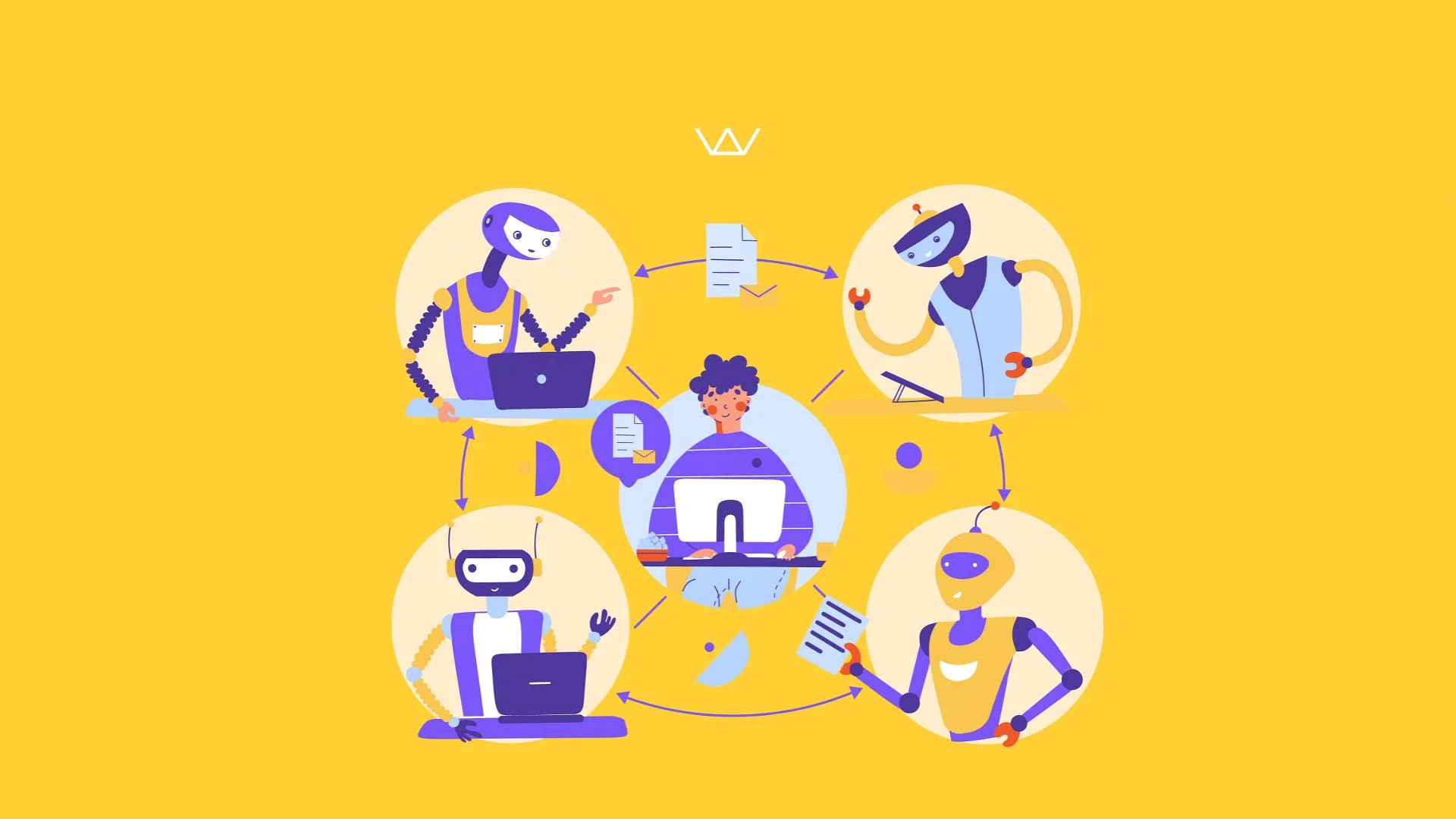
People use the term "AI-native" in different ways, so here is what it means to us at Wolfpack Digital. For us, it has two main parts.
What we build: Products where AI is central to the experience, not just an extra feature. This includes LLM-powered features and copilots, autonomous agents that handle multi-step tasks across your tools, and retrieval-augmented generation (RAG) systems that use your own data.
How we build: Our senior team of product designers, engineers, and QA specialists uses AI to speed up every stage of delivery, but always keeps control over decisions. Designers use AI-powered research to size markets and validate ideas in days, then move straight to high-fidelity concepts. Engineers work with AI assistants in the IDE. QA teams expand test coverage with AI-generated cases and automated evaluation runs.
These two parts support each other. A team that uses AI daily knows where AI works well and where human oversight is still needed.
The market context, briefly
The global AI market is set to grow about 15% a year to reach US$1.42 trillion by 2032 (Statista). With growth like this, discipline matters more than excitement. Many products now include AI features that add cost but not value. The most successful teams use AI to solve real user problems and keep a close eye on quality.
Our discipline comes from experience. Since 2015, Wolfpack Digital has delivered over 250 web and mobile products in areas like fintech, healthtech, transportation, beauty, e-learning, IoT and many more. Our Responsible AI work on Equality AI, which helps reduce bias in healthcare machine-learning models, won a Webby Award in 2024. Our front-end work on ROAM-AI was also nominated for a Webby. We use this experience to guide every AI decision we make.
How we use AI across the software development process
AI speeds up every stage of building a product. Here is how it fits into our process.
Product analysis and discovery
Most delays in product work are not due to technical challenges. They come from unclear features, missed edge cases, or untested assumptions. We use AI to spot these issues early by testing the scope, generating user scenarios, and checking ideas against real market data. This way, we fix problems before they become costly rework later in development.
Product design
AI-powered research helps our product designers go from problem to a tested solution in just days. We quickly create high-fidelity, clickable concepts that founders can show to real users early. This means feedback comes in while it is still easy and affordable to make changes.
Engineering
Our engineers work with AI coding assistants in the IDE, using tools like Claude Code, Cursor, and GitHub Copilot, depending on the team and project. They use these tools for feature development, automated test generation, AI-assisted code review, and refactoring, always with senior oversight. For agents and workflow automation, we use frameworks like LangGraph and Temporal, plus the Anthropic and OpenAI SDKs. For LLM-powered products, we pick the model that best fits each project's needs for accuracy, speed, and cost.
QA and testing
AI helps our QA team cover more ground and catch issues faster by generating test cases and running automated evaluations. For AI features, we use a special evaluation process that checks accuracy, bias, jailbreak resistance, and cost before launch and with every update.
The part that does not get automated
Every line of code and every AI output is reviewed, tested, and signed off by the Wolfpack Digital team before it ships. AI accelerates the work; it does not replace the engineering judgement behind it. This is the difference between shipping fast and shipping something you can stand behind, and it is why our clients trust us with regulated products in finance and healthcare.
The three things we build with AI
When a language model is at the heart of a product, it usually takes one of three main forms.
LLM-powered products |
Conversational assistants and domain-specific copilots where the model is the core experience |
Support, onboarding, knowledge work, content generation |
Autonomous agents |
Software that takes multi-step actions across your tools — drafting, approving, monitoring, booking — with guardrails and a human in the loop |
Workflow automation, ops-heavy tasks |
RAG systems |
A model that answers using your private documents, databases, or product catalogue, without retraining or leaking data |
Internal knowledge bases, customer-facing Q&A, search |
Most of the work is in choosing the right approach and setting it up correctly. A well-designed RAG system that organizes, retrieves, and evaluates data carefully will often perform better than a larger model that is not used thoughtfully.
Building responsibly: data, privacy, and the EU AI Act
Trust is essential for AI products. Two main factors guide how we build them.
First, data. LLMs and RAG systems depend on data, which makes ethical sourcing, privacy, and user consent core engineering concerns rather than afterthoughts. As an ISO 27001-certified team, we design data handling — what an app requests, how it stores it, how transparently it manages it — from day one.
Second, regulation. The EU AI Act is now in force and sets risk-based obligations for AI systems, with tighter rules planned for high-risk uses in areas like healthcare, finance, and employment. We build AI features with these obligations in mind, alongside GDPR and, where relevant, sector rules such as HIPAA and DORA, so compliance is part of the design rather than a scramble before launch.
From idea to live product in two to four weeks
Because we are AI-native in both what we build and how we build, we can deliver an MVP from idea to live product in just two to four weeks. AI speeds up analysis, design, development, and testing, while our senior team ensures quality stays high. This means founders get a real product in weeks, not months, and can gather feedback and traction much sooner.
Why teams choose Wolfpack Digital for AI in software development
We offer full-service product support, including product strategy, product design, web and mobile development, AI-native development and AI integration, QA, and maintenance — all in one place. Our team of over 70 people works from our Cluj-Napoca headquarters and Dublin office, and we hold ISO 27001, 9001, and 14001 certifications. Our award-winning AI portfolio shows our expertise. Most importantly, we see AI as a tool for senior engineers, which is what turns a demo into a real product.
If you are working on a project where AI should be at the core, we would love to help you build it right.