Romania's IT Industry and the €40 Billion Question
Cristina Strîmbu
Marketing Specialist
Reading time: 6 min
Published: Sep 28, 2026
Key takeaways
- An ANIS study presented on B1 TV's Investim în România estimates that a shift towards innovation, own products and intellectual property could add €40 billion to Romania's GDP and create more than 295,000 indirect jobs.
- The IT sector already accounts for about 8% of Romania's economy, with annual turnover above €24 billion and digital exports close to 45% of the country's services exports.
- International clients ask for process automation, consumer-facing apps, AI solutions and data platforms, and above all for a long-term partner who understands their business.
- Platforms that took 9 to 12 months to build can now ship in three or four, at significantly lower cost, which makes 2026 a strong year to revisit shelved software projects.
- AI will require some IT professionals to retrain, and Georgina Lupu Florian expects developers to focus more on the business and social problems technology can solve.
- Wolfpack Digital treats ethics, security and data governance as part of every project from day one, backed by ISO 27001 certification and an intake filter for projects.
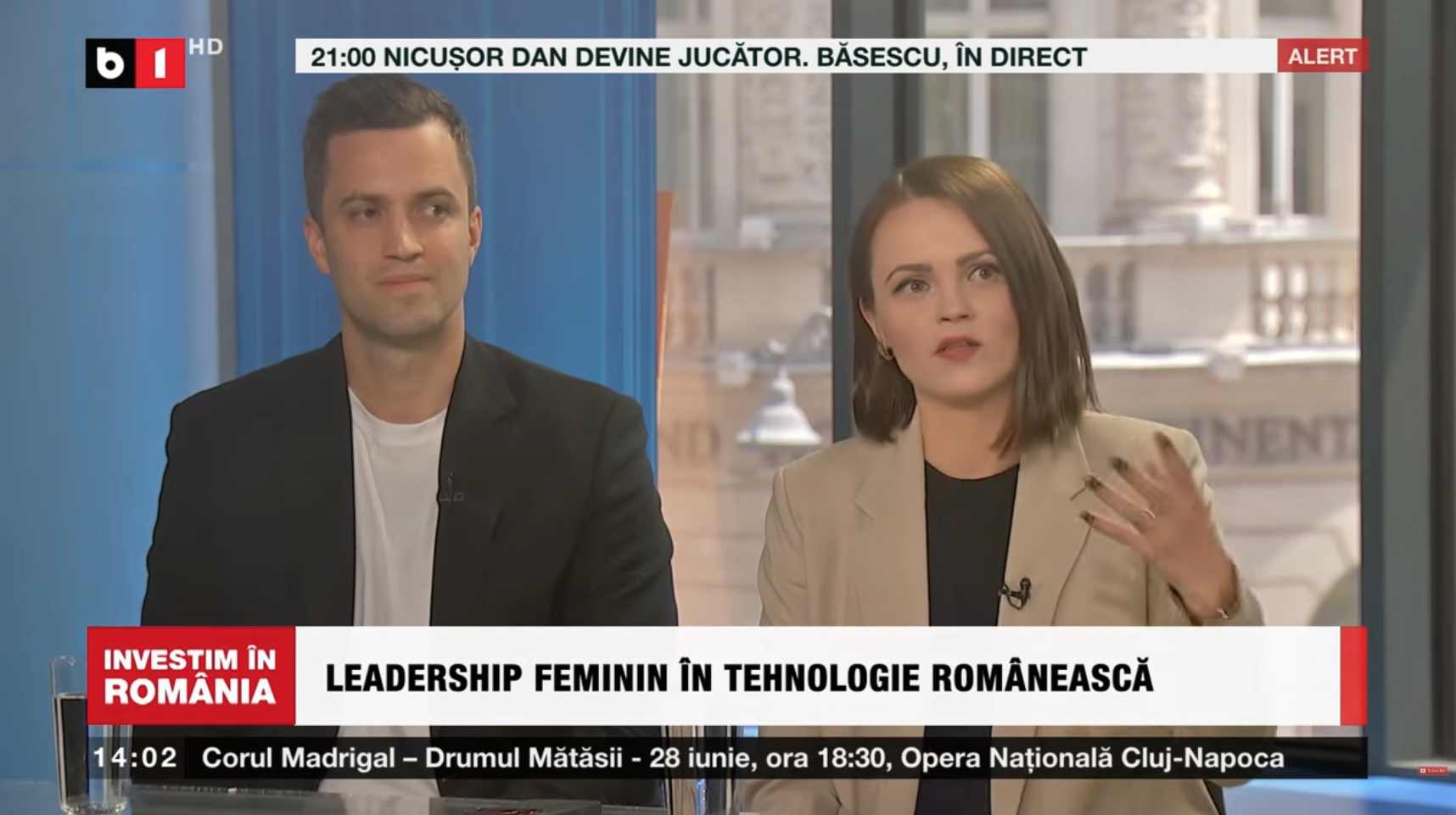
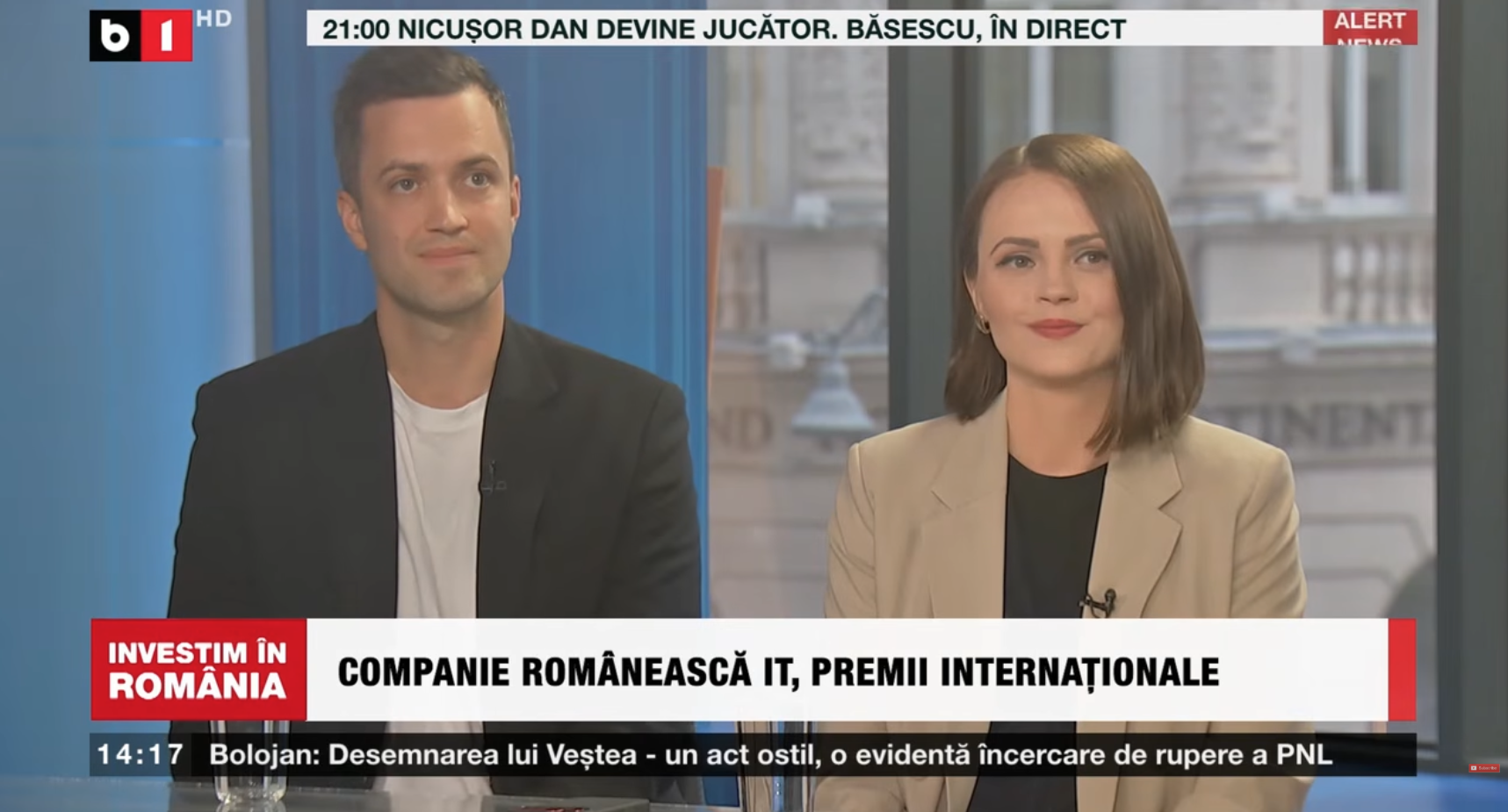
Georgina Lupu Florian and Adrian Florian, Wolfpack Digital’s Co-CEOs, took part in a television programme called Investim în România ("Investing in Romania"), which was hosted by Flori Stoian on B1 TV, one of Romania’s top national TV channels. The discussion began with presenting the findings of a study carried out by ANIS, the association representing the Romanian software and services industry; it then turned to more sensitive issues such as what happens to people in the technology sector when AI contributes to writing the code, what actual requests international clients make, and why a company headquartered in Cluj-Napoca carries out more work overseas than within Romania.
Here are the key points to carry forward.
All quotes below are translated from the original Romanian.
The numbers behind the conversation
The study provides a figure for something that the industry has already suspected for many years; if Romania's IT sector moves towards innovation and starts to develop its own products and intellectual property, it could boost the nation's GDP by an additional €40 billion and generate more than 295,000 indirect jobs.
The initial position is already important since the industry represents about 8% of the national economy, annual turnover in the sector is over €24 billion, and digital exports account for nearly 45% of Romania's services exports.
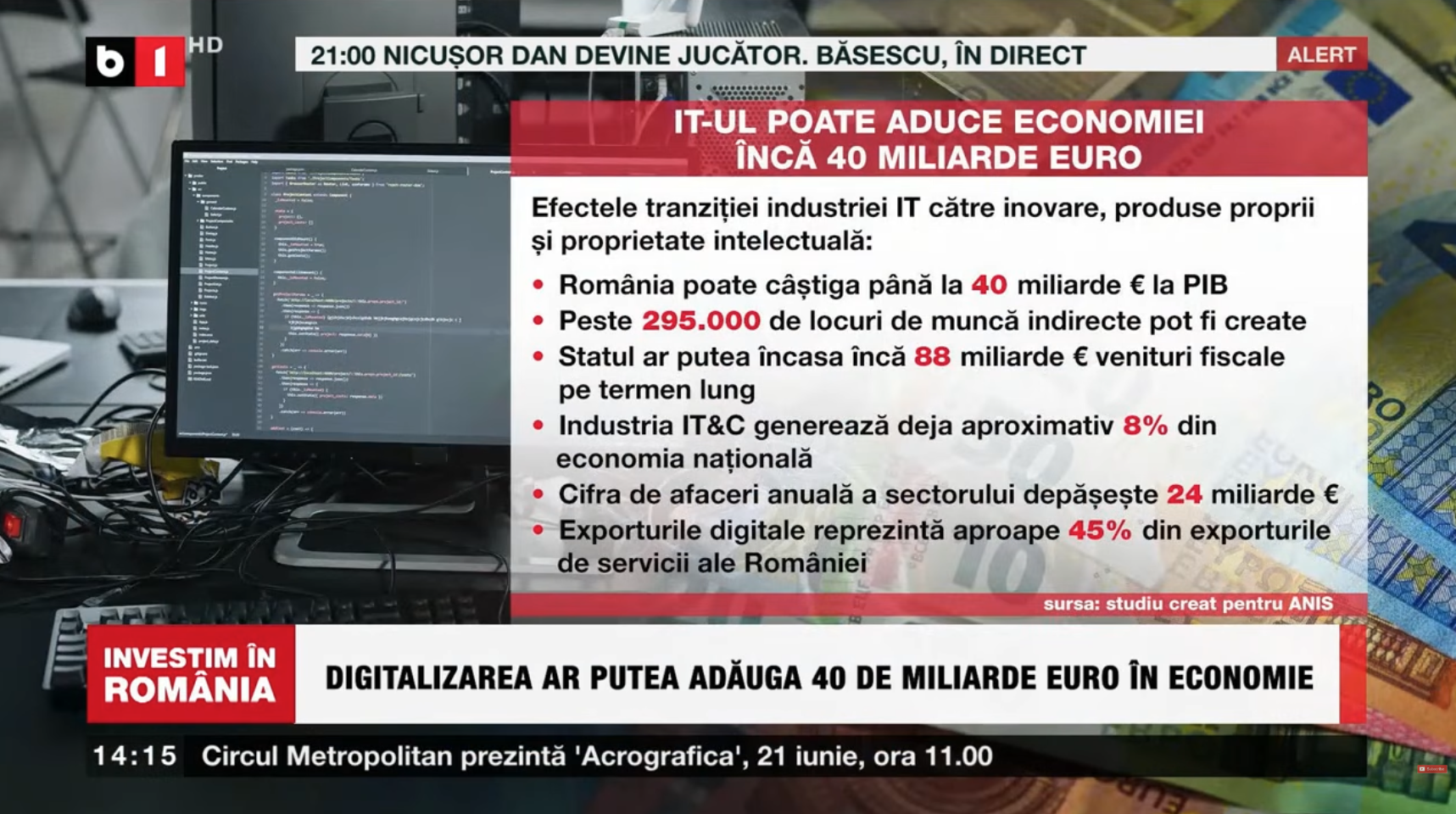
The difference between the present situation and the one that is expected lies in the kind of work, not in the quantity of it.
Romania is already on the map, and clients follow
Asked how international clients find a company based in Cluj-Napoca, Adrian Florian credited the country's reputation alongside the company's own work.
"Romania is considered internationally to be a very, very important IT hub, which is why many clients or potential clients look for IT partners and often end up finding us."
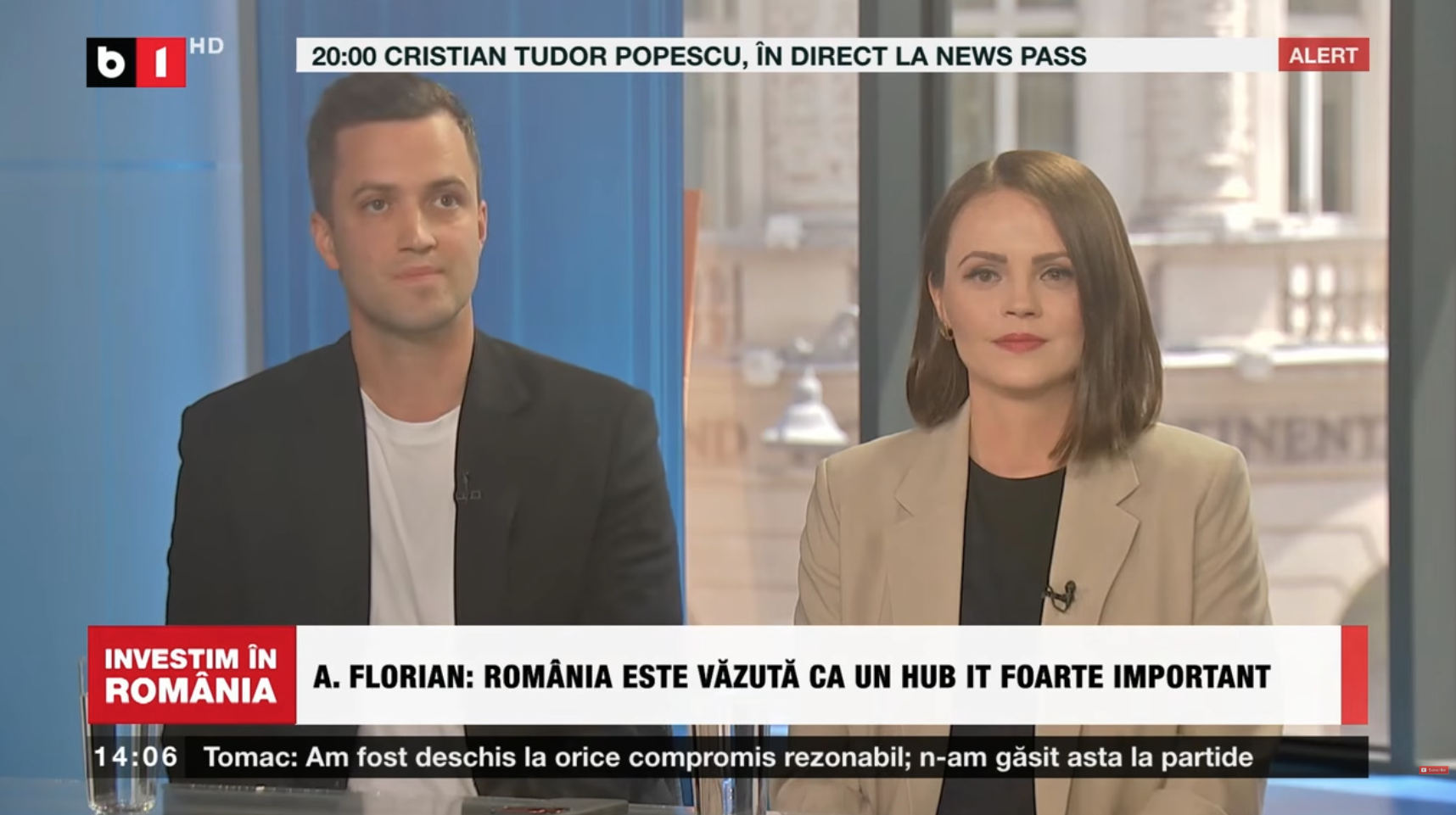
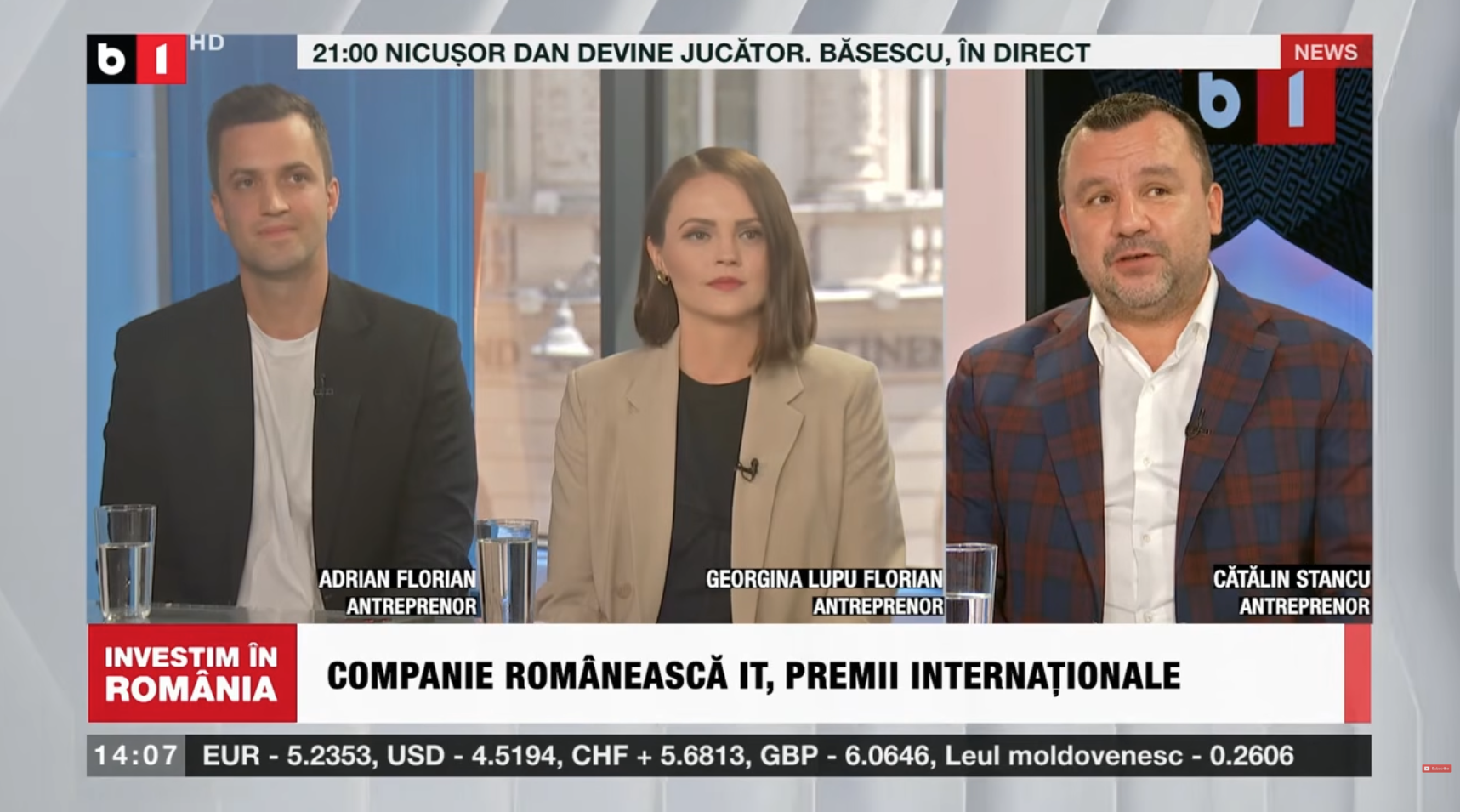
Over eleven years, Wolfpack Digital has worked with clients across North America and Western Europe on more than 250 platforms, in sectors including pharma, banking, medical and transport. International recognition played its part: an award won in New York for responsible AI, on a project that reduces inequality in digital health; a European Technology Award received in Paris for application development; and an Apple Design Awards nomination in San Francisco for a UK product that helps passengers with disabilities travel.
Cătălin Stancu, the programme's permanent commentator, maintained that examples such as these are important for reasons that go beyond the company which obtains them, since they draw in additional investment into Romania.
What international companies ask for
Georgina Lupu Florian, Founder and Co-CEO of Wolfpack Digital, described the patterns that repeat across incoming briefs:
- platforms that automate internal processes and bring cost efficiency
- consumer-facing applications, where user experience drives loyalty and revenue
- AI solutions, requested more frequently than before
- platforms that unify data, so business decisions rest on a fuller picture
Above all of these sits a criterion that has nothing to do with technology:
"They're looking for a partner they can trust and build a long-term relationship with, one that truly understands their business needs. They're far less interested in a technology partner whose only strength is writing good code."
Digital products now ship three times faster
Adrian Florian was specific about what has changed in the past two years. Platforms that required 9 to 12 months can now be delivered in three or four, at significantly lower cost.
The steps themselves have not changed. Work starts from the problem that needs solving, moves into understanding it properly, then an interactive mockup of the platform, then development, testing, launch and iteration.
"The product reaches users faster, and any assumption can be validated."
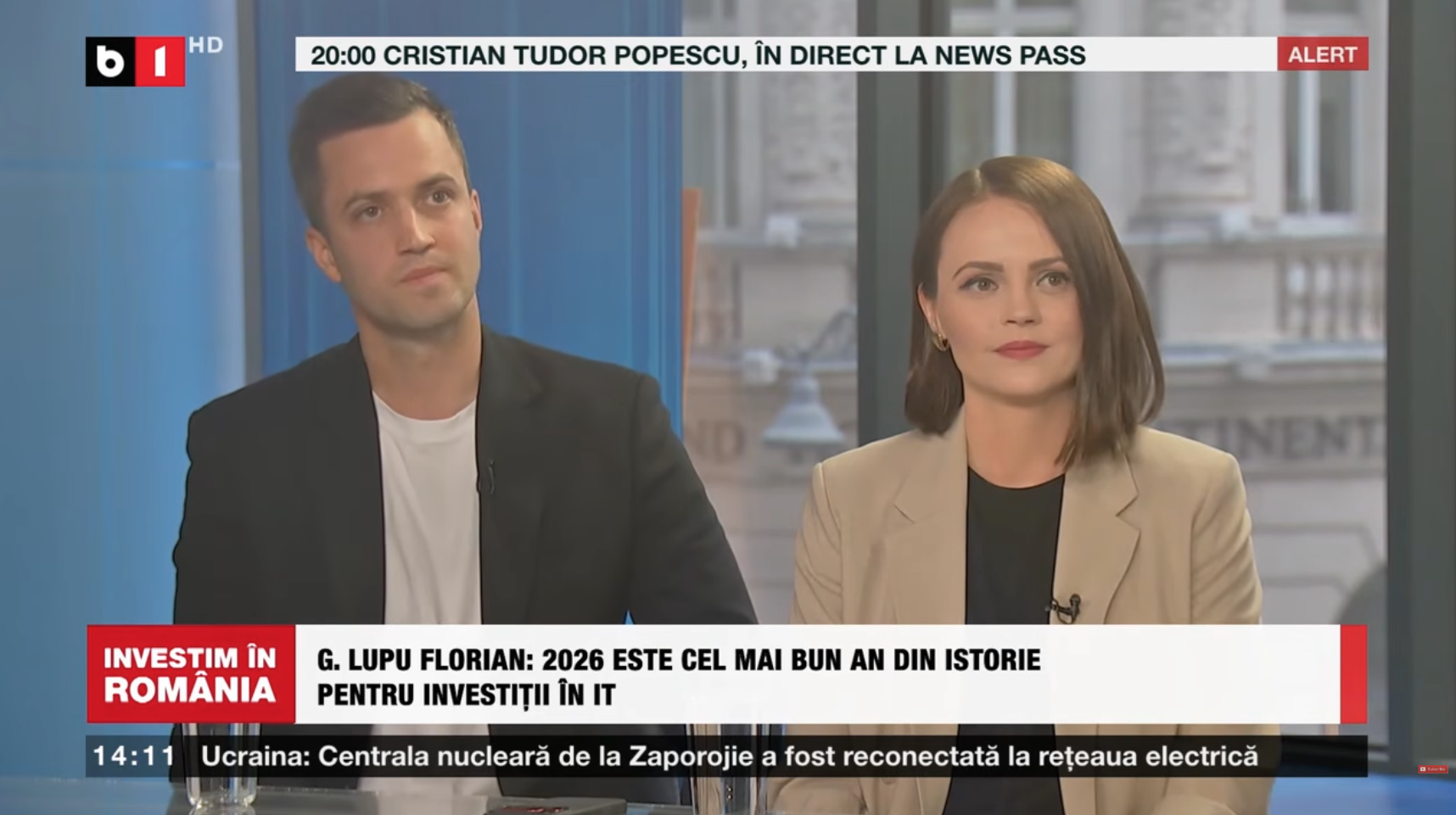
Georgina Lupu Florian took the point further, towards the companies that asked for an estimate, saw the cost, and shelved the project.
"With the arrival of very powerful artificial intelligence tools, the barrier to entry for building a software project has come down a great deal. If until now certain companies were afraid to start a software project for fear of very high costs, 2026 is the best moment in history to invest in it."
The companies this affects most are the ones that priced a build two or three years ago, struggled to justify the cost, and shelved the idea. Those estimates no longer hold. A project that failed a budget review in 2023 can clear one comfortably now, on the same scope.
AI, layoffs, and roles that are changing
This was the most open section of the conversation. Georgina Lupu Florian did not ease the difficult part.
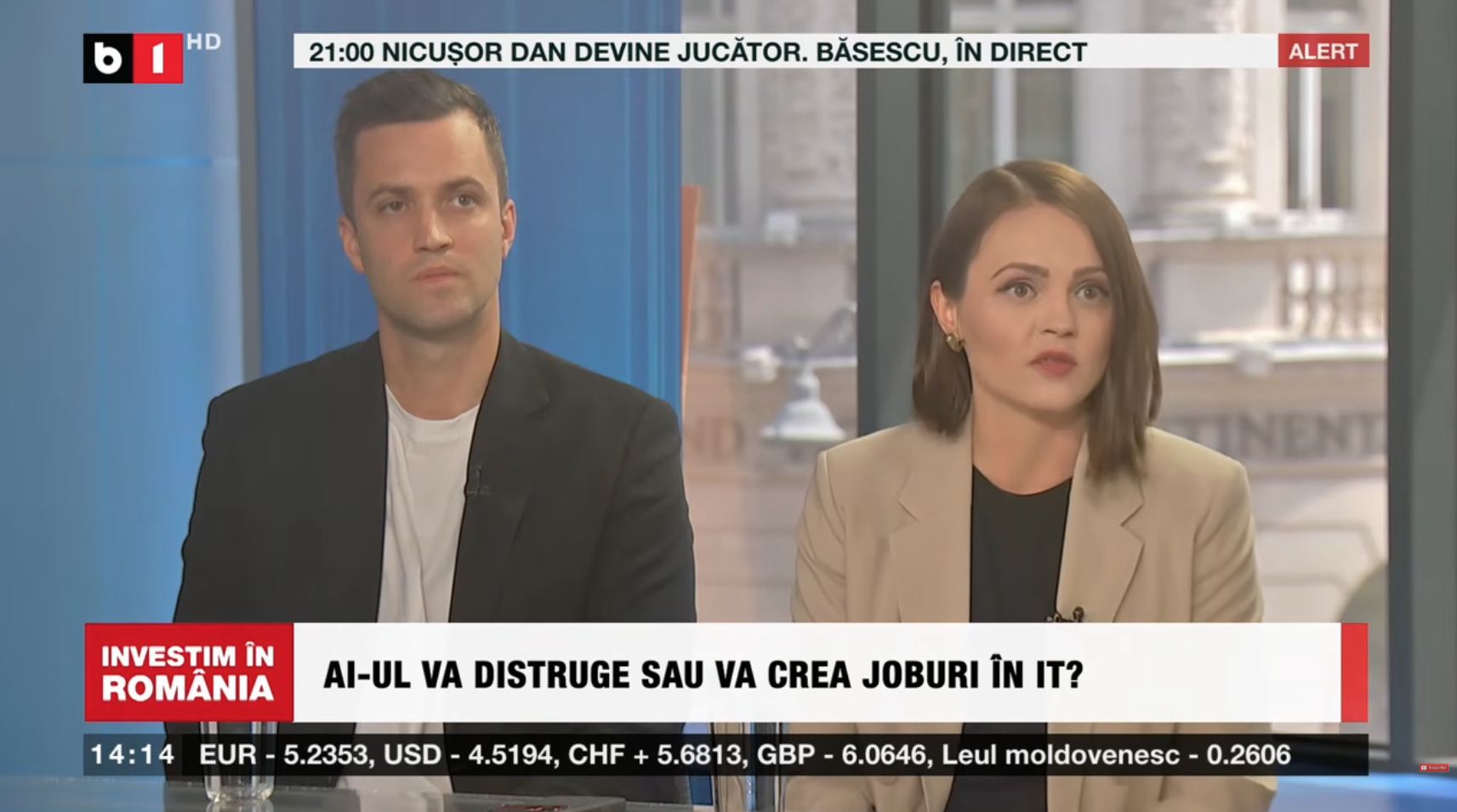
"Like any transformation, this one comes with opportunities and with threats. There will certainly be people who have to retrain."
The direction she sees for developers moves the emphasis away from writing code:
"Developers should stop concentrating merely on writing code and begin to pay attention to the business problems, or the social problems, which can be solved by means of technology."
The optimistic side comes from accessibility. The field is opening to people from outside it, and the productivity gain carries real potential for the wider economy, provided Romania builds a coherent national strategy around it.
Adrian Florian tied that directly to the €40 billion figure:
"We are now at a stage at which AI might appear to be a threat to this, but at the same time I believe we are also at a stage when we have a huge opportunity to move towards innovation."
Ethics is not a separate chapter
Asked about consumer safety, Georgina Lupu Florian outlined the internal policies which are applied in all projects: namely, which data is used, where it comes from, how it is treated, and what is disclosed to clients and users. There is also a filter at the point of intake which excludes any project that has an illicit implication from being taken on.
Because the team is certified to ISO 27001, Wolfpack Digital considers security and data governance to be something that is addressed from the very first day of a project.
Women in leadership in a field that remains male-dominated
Georgina Lupu Florian admitted that few women found ventures in the technology sector, although she pointed out that the number is increasing each year. She based her argument for diversity rested on performance.
"Diversity, when it works, produces better results in a company, financial results included."
The mechanism is simple in that more different viewpoints are included in the process of making decisions and as a result the benefits go to the final customer.
What the state should do
Cătălin Stancu closed with the shortest point of the programme, and probably the most quotable:
"The only thing the government needs to ensure is predictability; the companies know how to take care of the rest. The state should act more as a director than as an actor."
Closing thought
The topic eventually settled on an idea that was worth retaining. Although Romania's IT industry already has the necessary scale, the gap between 8% of the economy and that extra €40 billion lies in shifting from carrying out work to producing its own products.
If you have a digital project you shelved over cost or timeline, the maths has changed since you last ran it. Let's talk it through.