The high-tech beauty industry trends | A look in the mirror

Gina Lupu Florian
Founder & co-CEO
Reading time: 6 min
Updated: Jun 26, 2026
Key takeaways
- Beauty is now a tech industry. The global beauty and personal care market is on track for roughly $665–700 billion in 2026 (estimates vary by source), and the slice powered by AI, AR and smart devices, "beauty tech", is growing far faster than the market overall (~18% a year).
- AI is the differentiator. Personalized routines, AI skin and hair diagnostics, AR virtual try-on, and — newest of all — generative-AI beauty advisors are moving from novelty to baseline expectation. The AI-in-beauty segment alone jumps from ~$4.4B (2025) to ~$5.3B (2026).
- Sustainability and transparency are non-negotiable. Consumers reward clean, traceable, refillable products — and technology (ingredient-scanning apps, smart sampling, personalization that cuts returns) is how brands actually deliver on it. Wolfpack Digital builds beauty and health apps start-to-end — 250+ products delivered over 11 years, ISO 27001/9001/14001 certified.
The health and beauty industry is a booming market, and it's not slowing down. The global beauty and personal care market is projected to reach roughly $665–700 billion in 2026 (sources vary), up about 6–7% year on year. Within it, "beauty tech" — the products and experiences built on AI personalization, AR try-on and smart skincare devices — was worth about $66 billion in 2024 and is forecast to reach ~$173 billion by 2030 (≈18% CAGR), growing several times faster than beauty as a whole.
Technology has been driving innovation in beauty for years, and the pace is accelerating. The development of beauty apps and the use of AI and AR are making it easier for consumers to access information, try new products, and customize their routines. Here, we'll take a closer look at the high-tech beauty industry trends to watch.
High-Tech Top Beauty Trends Around The World
Beauty branding and cosmetic trends are increasingly consciousness-driven — shaped by consumer preferences rather than the old supplier-led, fast-fashion approach. The industry keeps growing, now tightly entwined with the health, wellness and self-care verticals.
The trends we cover below:
- Sustainability and clean beauty
- Transparency and diversity
- Augmented Reality and virtual try-on
- Artificial Intelligence, Machine Learning, and IoT
- Generative AI beauty advisors
- E-commerce, social commerce, and customer experience
Beauty Brands and Sustainability ♻️
Consumers are more conscious than ever, and meaningful sustainability messaging and positioning from beauty companies keeps rising.
The global cosmetics and beauty market is constantly evolving, with new products and trends emerging every year. Expect more emphasis on sustainable, eco-friendly products: cruelty-free, vegan, biodegradable, refillable, plastic-free, water-free, perfume-free, and packaged in sustainable materials.
The tech and personal-care industries help beauty brands become more eco-friendly through 👇
- Personalization services: algorithms that identify a consumer's specific needs and behaviour, leading to personalized routines and products — so customers are happier with purchases and return fewer of them.
- Reduction of overconsumption: people buy multiple products trying to find the one that fits. Smart personalization, excellent UX/UI, and clever copywriting help consumers quickly identify the right product without wading through hundreds of options.
- Reduction of sample packaging: AI can analyze purchase data and consumer needs to curate which products should be sampled, while AR virtual try-on reduces the need for physical samples entirely.
There's a long way to a fully green, sustainable industry, but technology can genuinely help the hair and beauty sector become more eco-friendly, avoid greenwashing, and make a real, positive impact — and push the skincare market toward more natural ingredients.
Transparency and Diversity in Cosmetic Brands and Beauty Companies ✌️
Consumers are more aware, educated and concerned, and they want brands doing their part. The years ahead will see continued growth in transparent packaging, trustworthy ingredient sourcing, clean beauty, and partnerships with small businesses and minority-owned brands.
This looks like a human-led shift, but technology helps ensure transparency and diversity, for example:
- marketplaces to identify niche chemists and small businesses for ethically sourced ingredients;
- apps to scan ingredients and explain what they actually are, in human-friendly language.
Augmented Reality (AR) and social media filters 📲
AR keeps hitting the charts across industries, and beauty has enormous room for it. With so much of life happening on camera, consumers want to look great online — and to test products without going in-store.
A few ways AR shows up in beauty:
- AR filters for skin brightening, glow effects, makeup and hair — everyone wants to look good in their feed.
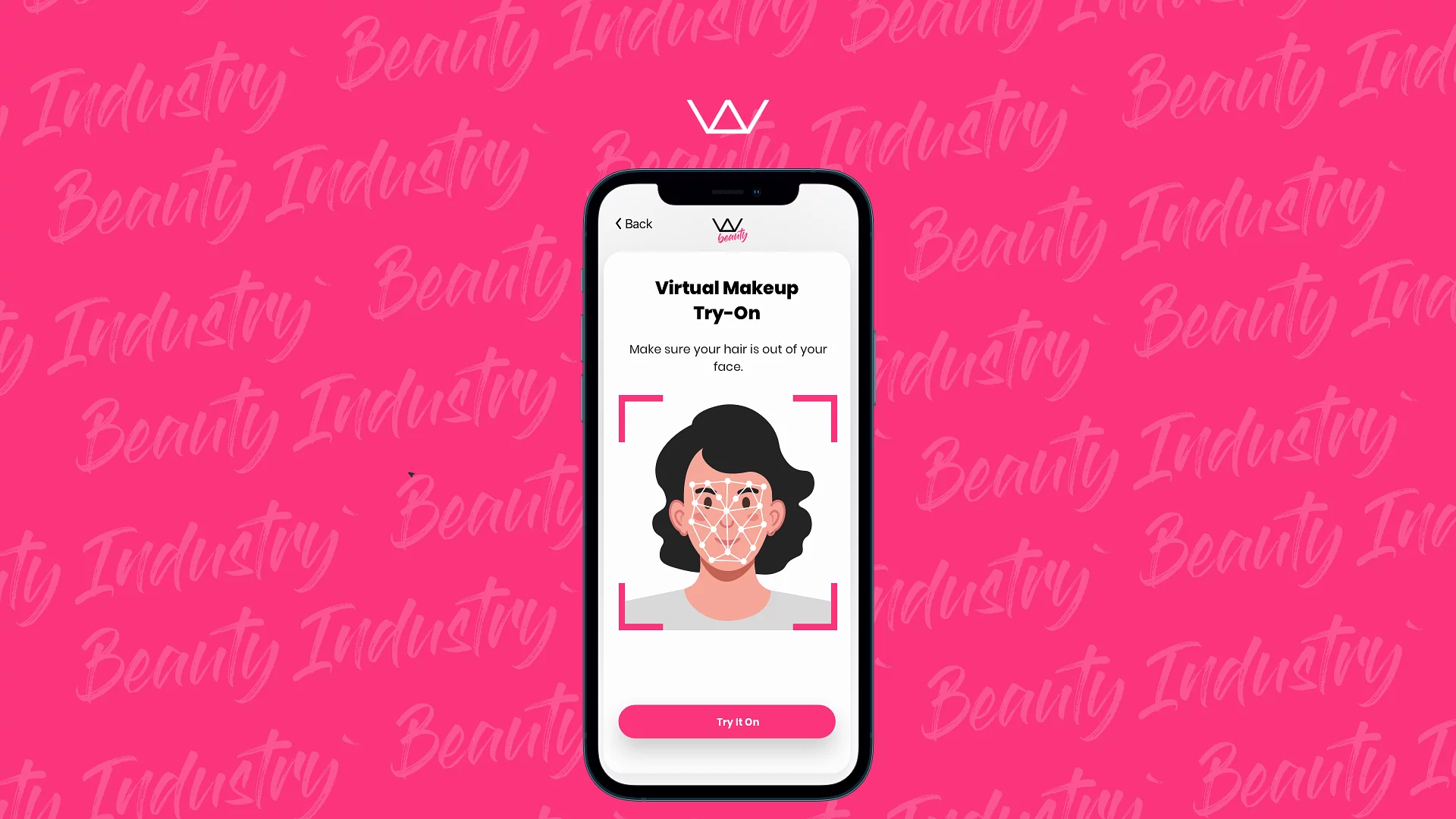
- Virtual try-on lets customers test makeup looks, shades and hairstyles in real time on their own devices, making purchases easier and more enjoyable. Brands like Sephora popularized AR filters on Snapchat and Instagram; the capability is now broadly expected.
What was once limited to well-established retailers is now far more affordable to implement, ARKit is a strong starting point, and virtual try-on is spreading from eyewear into jewellery, hair-colour and beyond.
The beauty of Artificial Intelligence (AI), Machine Learning (ML), and Internet of Things (IoT) 🤖
AI is no longer "behind" in beauty, it's the fastest-growing technology in the sector. The AI-in-beauty-and-cosmetics segment is forecast to grow from about $4.4 billion in 2025 to $5.3 billion in 2026 (~21% CAGR), driven by personalized recommendations, virtual try-on, AI skin analysis, and real-time customer engagement.
AI in the beauty industry
- Personalization: the right algorithms inside a beauty app connect skin type, preferences and goals to suggest personalized routines and products.
- In-depth analysis using AI and IoT: connected devices and standalone tools deliver deeper analysis and better personalization.
Beauty brands can now build a range of smart beauty devices:
- Skin scanners and skin apps for at-home skin assessments (health, hydration, etc.) — see also our piece on what SPF is and how to use technology to protect yourself.
- Hair scanners to diagnose scalp and hair conditions.
- Shade-match scanners that read colour and pigmentation to find the right foundation or makeup shade.
- Packaging/ingredient scanners that demystify cosmetic labels into human-friendly content.
- Makeup printers that scan skin and deposit precisely matched serum/coverage.
- Smart hairbrushes that use sensors to detect split ends, damage and frizz, then adapt brushing patterns.
- Multi-application devices — the field is moving from single-purpose tools toward all-in-one systems clinicians and consumers can use for multiple treatments.
Generative AI beauty advisors
The newest shift since this article first ran is generative AI moving into beauty. Brands are deploying conversational "AI beauty advisors" that answer questions, build routines, and recommend products in natural language, and generative models that create hyper-realistic virtual try-on and on-model imagery without a photoshoot. For product teams, this means:
- Conversational diagnosis + recommendation in one flow, replacing rigid quiz funnels.
- Generative try-on that renders looks on the actual user, not a generic model.
- Always-on personalization that updates as the customer's skin, season and goals change.
It's the clearest near-term differentiator in beauty tech and the area where a well-built app can leapfrog competitors still relying on static product grids.
Boosting purchasing decisions - When AR meets AI 🤝
The combination of AR and AI is accelerating adoption across verticals:
- E-makeup: wear a look for virtual-only interactions (video calls, live sessions).
- Smart sampling: try-on solutions and samples produced and delivered based on personalized recommendations.
- Digital diagnosis and e-expertise: virtual consultations with cosmetologists and dermatologists — now an expectation, not a novelty.
- Diagnosis to delivery: recommended products delivered to the doorstep in a few taps.
E-commerce and customer experience💰
E-commerce isn't news, but digitally enhanced stores and phy-digital spaces are. Brands and retailers are blending online and in-store into one experience:
- Interactive displays, screens and selfie studios in physical stores.
- Virtual try-on from in-store stations for full looks.
- Smart touchscreens using infrared to match skin tone to foundation.
- Contactless shopping: scan and check out from a phone.
Subscription-based e-commerce for beauty
Strong demand continues in clean hair and body care, sunscreen and serums. As routines become a priority, recurring purchases grow — expect more customized monthly subscriptions (driven by scanner/e-diagnosis data) and continued growth in men's skincare plans.
Social commerce, personal care on another level
Time spent on social keeps climbing, and it's where brands showcase products through social marketing, user-generated content and influencer partnerships. Native shopping features keep users in-platform, building brand loyalty. Online shopping and subscription boxes remain especially popular with Gen Z and younger generations who buy everything online.
With AI, AR and beauty apps, consumers now access a wider range of products and get personalized recommendations — and as the market grows, beauty trends will keep embracing innovation and creativity.
Build Your Beauty App With Us 💄
The beauty of having us as a tech partner is that we know how this industry works. Our portfolio covers apps for diagnosis, treatment and hyper-personalization across beauty and health, and we look forward to the next meaningful digital transformation.
About Wolfpack Digital 🐺
Over 11 years we've delivered 250+ digital products as a web and mobile app development company, on a mission to bring performance and beauty to the world through technology. We work start-to-end across beauty app design and development, fintech, healthcare IT, custom web development, and cross-platform app development.
Have a project in mind? Get in touch and let's talk.