
Privacy-by-Design in Healthcare Software: A Practical Guide

Cristian Virciu
Head of Product Design
Reading time: 9 min
Published: Mar 26, 2026
Key takeaways
- Privacy-by-design means weaving compliance into your UX flows, data architecture, and infrastructure from the start, not bolting on security at the end.
- HIPAA readiness shapes every product decision, from consent flows and messaging to audit logging and how you model your data.
- Healthcare software needs explicit consent, minimal data collection, and clear data boundaries, especially when integrating with EHRs or third-party systems.
- Under HIPAA (45 CFR 164.316), documentation and audit records must be retained for at least six years, so plan your logging and storage early.
- Teams that treat privacy as a design constraint rather than a blocker ship faster and avoid costly rework later.
TL;DR
- Privacy-by-design means weaving compliance into your UX flows, data architecture, and infrastructure from the start, not bolting on security features at the end.
- HIPAA readiness shapes every product decision: from consent flows and messaging features to audit logging and how you model your data.
- Healthcare software demands explicit consent mechanisms, minimal data collection, and crystal-clear data boundaries, especially when you’re integrating with EHRs or third-party systems.
- In our experience, teams that treat privacy as a design constraint (not a blocker) ship faster and avoid costly rework down the road.
What Is Privacy-by-Design?
Let’s start with the basics.
Privacy-by-design is a framework where data protection is embedded into product development from the very beginning. Instead of building features first and then layering on privacy controls later, you design systems that minimize data exposure, enforce access controls, and provide transparency by default. It’s a product strategy decision as much as a technical one.
In healthcare, this matters more than in pretty much any other industry. Patient data is deeply sensitive, regulations are strict, and the consequences of getting it wrong, either financially, legally or reputationally, are severe. We’re talking the kind of severe that can sink a product or a company.
Healthcare Compliance Environments and Risk Sensitivity
Here’s the deal: healthcare operates under some of the most demanding regulatory frameworks in software. Depending on your market, you’ll encounter HIPAA (US), GDPR (EU), MDR for medical devices, and various regional health data laws. For us, as product designers and strategists, understanding these frameworks isn’t optional, it’s foundational to every design decision you make.
And risk sensitivity in healthcare isn’t theoretical. A data breach doesn’t just mean fines, it means patients lose trust in their providers, and providers lose trust in your product. That’s a chain reaction you really don’t want to trigger.
When does this matter? The moment your product handles any identifiable patient information: names, diagnoses, test results, appointment histories, or even IP addresses tied to health queries. This is also referred to as Protected Health Information (PHI).
What usually goes wrong? Teams underestimate scope. They assume “we’re just a scheduling app” or “we only show aggregated data” and skip compliance planning entirely. Then they discover mid-build that their chat feature stores PHI, or their analytics pipeline captures way more than intended. By then, you’re looking at a redesign, not a quick fix.
HIPAA Readiness: What It Practically Affects
HIPAA (Health Insurance Portability and Accountability Act) isn’t just a legal checkbox. It’s a design consideration that shapes nearly every product decision you’ll make.
Here's what HIPAA affects in practice:
- Authentication: Multi-factor authentication is mandatory, not optional. Session timeouts? Enforced. No exceptions. These are more than just security features, they’re UX patterns you need to design for thoughtfully.
- Data storage: PHI must be encrypted at rest and in transit. You need to map exactly where patient data lives, including backups, logs, and caches.
- Audit trails: Every access to patient data must be logged. Who viewed what, when, and from where. This has direct implications for how you design admin dashboards and reporting features.
- Messaging features: If your app includes chat between patients and providers, those messages are PHI. They need encryption, access controls, and retention policies. Your messaging UX can’t be an afterthought.
- Third-party services: Every vendor that touches PHI needs a Business Associate Agreement (BAA). Your cloud provider, analytics tools, error logging services, essentially everyone.
Privacy-by-Design as a UX, Data, and Architecture Concern
Here’s something I can’t emphasize enough: privacy-by-design isn’t just a backend concern. It affects user experience, data modeling, and system architecture equally. And from a product design perspective, this is where the real craft lives. Let me break it down.
UX Implications
- Consent flows: Users must understand what data you collect and why. This means clear, human language, not legal jargon buried in terms of service that nobody reads or understands. Designing consent that feels transparent rather than intrusive is a UX challenge worth investing in.
- Data minimization: Only ask for information you actually need. Every additional form field is a liability and a friction point in your product’s user experience.
- Transparency: Users should be able to see what data you hold and request deletion. It’s their data, after all. Design for this from the start because a well-crafted data settings page builds trust.
Data Architecture Implications
- Separation of concerns: Keep identifiable data separate from clinical data where possible. Use pseudonymization. This architectural decision directly influences what you can and can’t show in the UI.
- Retention policies: Define how long you keep data and automate deletion. Don’t just hoard everything forever, but instead design your product with a data lifecycle in mind.
- Access controls: Role-based access isn’t optional. A receptionist shouldn’t see the same data as a physician. Period. Each role needs a carefully considered view of the product.
- Data encryption: Use encryption strategies to add an extra layer of security for all of the private/sensitive data.
Infrastructure Implications
- Encryption everywhere: TLS for transit, AES-256 for storage. No exceptions, no shortcuts.
- Logging without leaking: Audit logs must capture access events without storing PHI itself in the logs. Tricky, but essential.
- Environment isolation: Development and staging environments should never contain real patient data. Ever. This includes the design prototypes and test accounts your team uses daily.
Secure Communication: Chat, Messaging, and Data Exchange
Real-time communication is increasingly table stakes in healthcare products. Patients want to message their providers. Care teams need to coordinate. And that’s great! But from a product design perspective, it comes with serious responsibility.
What secure communication requires:
- End-to-end encryption for message content
- Server-side encryption for stored messages
- Access controls ensuring only authorized participants can view conversations
- Message retention and deletion policies aligned with compliance requirements
- Delivery confirmations and read receipts that don't leak metadata
Common mistakes teams make:
- Using consumer messaging APIs (like standard SMS) without understanding their compliance gaps
- Storing message content in searchable plaintext for “convenience” (please don’t)
- Forgetting that attachments (images, documents) in messages are also PHI
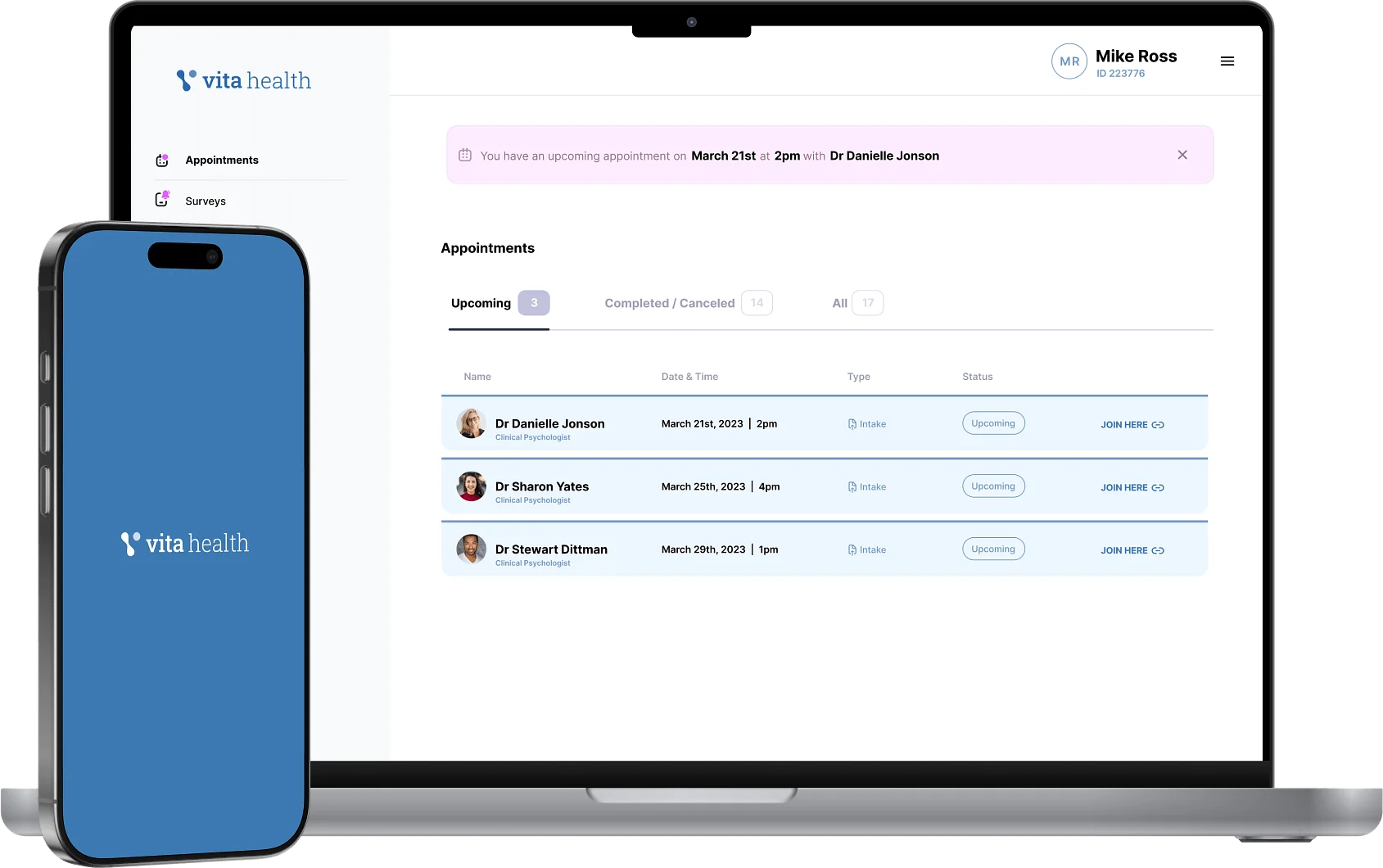
In our experience with Vita Health, building a telemedicine platform, secure communication wasn’t an add-on feature, it was a core product decision from day one. We designed encrypted channels for patient-provider messaging alongside remote monitoring data flows, ensuring that vital signs data and conversation history maintained the same security posture. When messaging is part of your product’s core value proposition, you can’t afford to compromise on how it’s built.
Telemedicine and Remote Interaction Flows
Telemedicine introduces some genuinely unique privacy challenges. You’re handling video streams, screen sharing, patient images, and real-time data, often across varying network conditions and devices. From a product strategy standpoint, every one of these touchpoints needs a privacy-first design approach.
Design considerations for telemedicine:
- Video encryption: WebRTC with SRTP encryption is standard, but verify your implementation actually works as intended. Don’t just trust the defaults.
- Recording consent: If sessions are recorded, explicit patient consent is mandatory. This needs to be a clear, well-designed moment in the user flow—not a checkbox buried in settings.
- Screen sharing boundaries: Providers may accidentally share screens showing other patient data. Build UX guardrails that make this kind of slip-up difficult.
- Connectivity handling: What happens when a connection drops mid-consultation? Design for graceful degradation and make sure no PHI gets cached insecurely on the client.
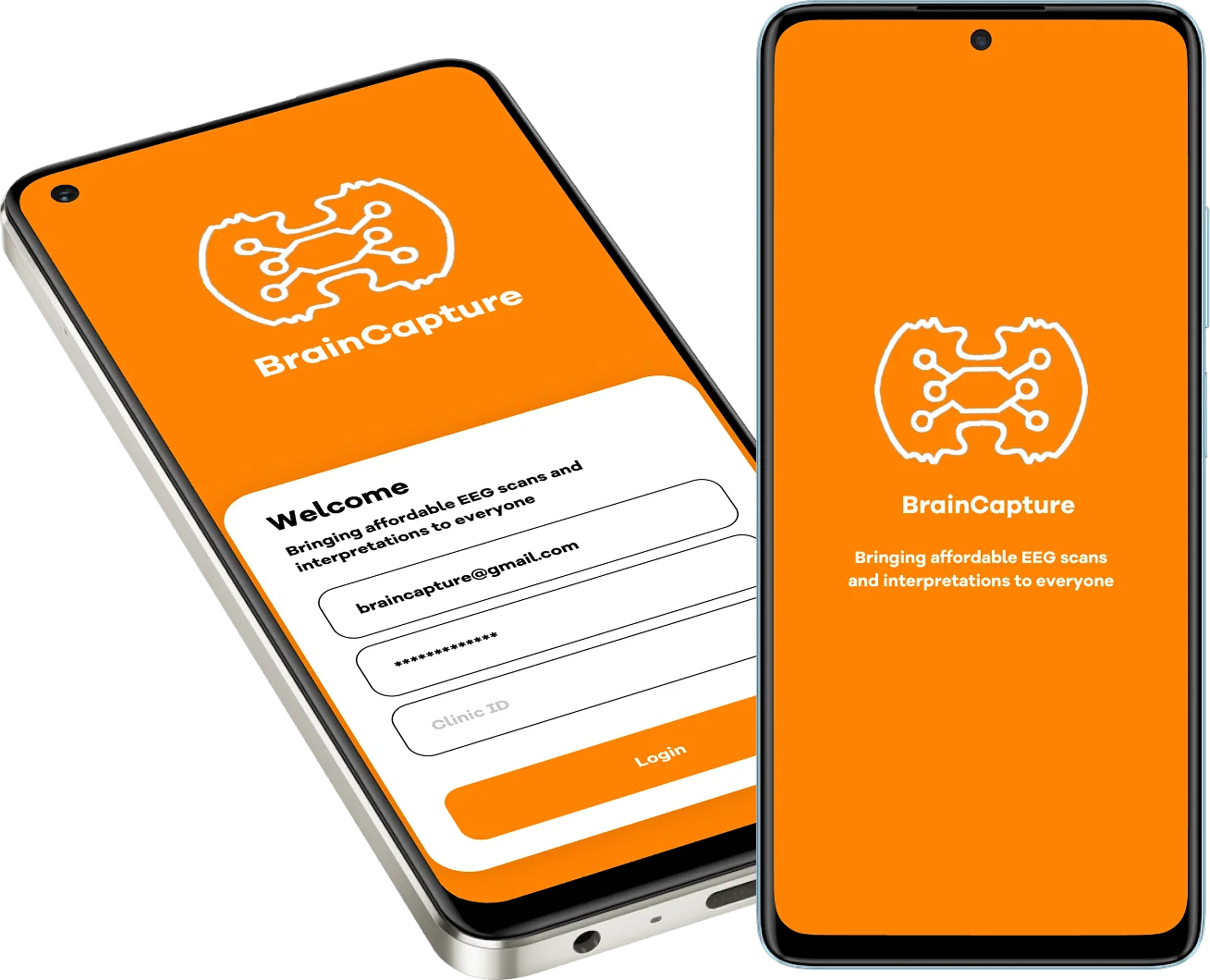
In our experience with BrainCapture, a CE-certified medical device platform for EEG diagnostics, we had to solve for remote interaction in low-resource settings, and it was a fascinating design challenge. The mobile app needed to work offline, capturing EEG data via Bluetooth from the amplifier, then syncing to a cloud-based telemedicine platform where specialists could analyze results remotely. This required meticulous design of local data handling, sync protocols, and clear boundaries around what data existed where at any given moment. The product experience had to feel seamless while the underlying architecture handled enormous complexity.
Patient Data Access Control and Audit Trails
Access control in healthcare must be granular and auditable. A simple “admin” and “user” model won’t cut it. Healthcare workflows are far more nuanced, and your product’s permission model should reflect that.
Effective access control includes:
- Role-based permissions aligned with clinical workflows (physician, nurse, admin staff, patient)
- Context-aware access (a provider should only see their own patients, not all patients in the system)
- Regular access reviews and permission audits
Audit trail requirements:
- Log every access event: who accessed what record, when, and what action they took
- Make logs tamper-evident (append-only, with integrity verification)
- Retain logs for the period required by regulation. Under HIPAA's documentation requirements (45 CFR 164.316), records must be kept for a minimum of six years. That’s a lot of logs, so plan your storage strategy accordingly.
- Ensure logs themselves don't become a privacy risk (don't log PHI in the audit trail)
Trust-Driven Delivery Expectations in Healthcare
Here’s something worth internalizing: healthcare clients have very different expectations than typical software buyers. Trust is the currency of this market.
What healthcare stakeholders expect:
- Transparency about security practices: Be prepared to complete security questionnaires, provide SOC 2 reports, and explain your architecture in detail. They will ask.
- Compliance documentation: You need to demonstrate compliance, not just claim it. That means documented policies, procedures, and evidence.
- Incident response plans: What happens if there's a breach? Healthcare clients want to see your plan before they ever need it.
- Long-term reliability: Healthcare systems often run for years. Clients want confidence you’ll maintain and support the product long-term. Your product roadmap matters as much as your current feature set.
At Wolfpack Digital, we’ve learned that healthcare product development requires a fundamentally different delivery mindset. With BrainCapture, achieving CE certification as a Class IIa medical device under EU MDR 2017/745 meant rigorous documentation, IEC 62304-compliant development processes, and ongoing quality management. The technical work was only part of the equation, demonstrating compliance through documentation and process was equally important. It’s a different game, but honestly? It’s a rewarding one.
Common Mistakes in Healthcare Software Privacy
Let’s talk about what goes wrong. Because it does go wrong, more often than you’d think.
1. Treating compliance as a final checklist
Privacy and compliance need to be embedded throughout your product development process, not verified at the end when it’s too late to fix things properly. Think of it like accessibility: retrofit is always more expensive than doing it right from the start.
2. Underestimating the scope of PHI. PHI isn’t just diagnoses and prescriptions. It includes appointment times, IP addresses associated with health queries, device identifiers, and more. The scope is wider than most teams realize, and it affects which features you can build and how.
3. Relying on "security through obscurity" Assuming attackers won't find your vulnerabilities isn't a strategy. Assume breach and design for containment.
4. Ignoring the human layer. The best encryption in the world doesn’t help if staff share passwords or fall for phishing attacks. This is where product design really shines: crafting UX that makes the secure path the easiest path, and designing workflows that discourage risky workarounds.
5. Building features before understanding data flows. Every feature that touches patient data needs a data flow analysis before development begins. Where does data come from? Where does it go? Who can access it? Map this out during product discovery, not after you’ve started building.
Recommendations: When to Prioritise What
Start here (before writing any code):
- Map your data flows and identify all PHI touchpoints
- Define your compliance scope (HIPAA, GDPR, MDR, etc.)
- Choose infrastructure that supports compliance (BAA-ready cloud providers)
During design:
- Build consent flows into your UX from the start
- Design for minimal data collection. Question every form field
- Plan your audit logging architecture early
During development:
- Encrypt everything by default
- Implement role-based access control early (not as an afterthought)
- Test your security assumptions with penetration testing
Before launch:
- Complete compliance documentation
- Conduct a thorough security review
- Prepare your incident response plan
When you absolutely shouldn't cut corners:
- If your product handles PHI, never skip encryption or access controls to ship faster
- If you're building medical device software, never bypass regulatory processes
Final Thoughts
Privacy-by-design in healthcare software isn’t about adding restrictions. It’s about building products that patients and providers can actually trust. And trust, in this industry, is everything.
When privacy is treated as a design constraint from day one, it becomes an enabler rather than a blocker. We’ve seen this firsthand across projects like BrainCapture’s CE-certified EEG platform, Primary.Health’s public health infrastructure, U-Image’s global medical imaging collaboration, and Vita Health’s telemedicine solutions. The teams that embed privacy into their product strategy, UX, and architecture ship more confidently and build stronger relationships with healthcare clients.
For founders and product leaders stepping into healthcare: treat privacy as a competitive advantage, not a compliance burden. Your users' trust depends on it.
Stay curious, stay compliant, and keep building things that actually help people. Because at the end of the day, that’s what great healthcare product design is all about.
If you want to learn more about what it’s like working with a software development partner and what to look for, check our healthcare software development page, or get in touch to talk about your project.
References & Further Reading
- HHS HIPAA Audit Protocol – Official guidance on HIPAA compliance enforcement
- HIPAA Retention Requirements – Detailed breakdown of documentation and audit log retention
- EU Medical Device Regulation (MDR) 2017/745 – European Commission's official MDR resource
- IEC 62304 Medical Device Software Standard – ISO's official standard for medical software lifecycle
- HL7 FHIR Overview – Official FHIR specification documentation
- HHS Business Associate Agreement Guidance – Sample BAA provisions from HHS
This article reflects Wolfpack Digital’s experience designing and building healthcare software products. For specific compliance guidance, consult with qualified legal and regulatory professionals.