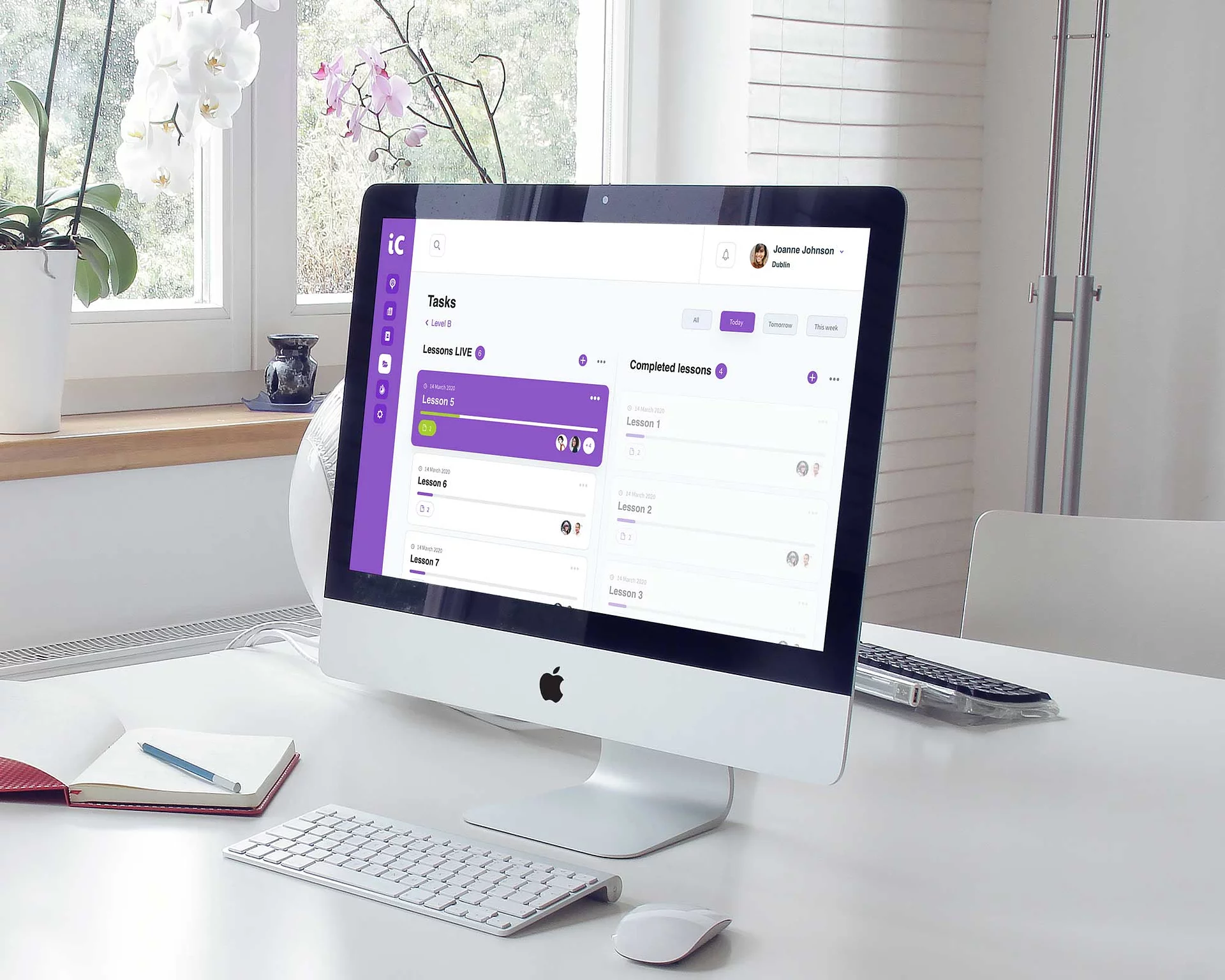
Gamify Remote Learning to 2x Student Engagement

Adrian Florian
co-CEO
Reading time: 2 min
Updated: Jul 2, 2026
Key takeaways
- Gamification in education can lift student engagement by as much as 150% versus traditional methods.
- A strong gamified learning platform combines video, quizzes, a drawing board, resources, and chat.
- High-impact features include points, badges, progress bars, tournaments, and interactive quizzes.
- The platform was built with Ruby on Rails, Vue.js, WebRTC, and OpenVidu for smooth real-time video.
- The result was a 2x to 3x increase in student engagement plus easier grading and management.
Why gamify remote learning?
Remote learning is now a normal part of school, not a stopgap. Yet keeping students engaged through a screen is hard. This is where gamification in education helps. It borrows the structure of games to turn passive lessons into active ones.
The results are striking. Game elements can lift engagement by as much as 150% versus traditional methods. Studies also link gamified learning to better retention and higher test scores. In one review, 88% of teachers who used digital games saw more student engagement.
What a gamified learning platform needs
To speed up learning, you need strong UI/UX and a fun, clear flow. It should work for every age group. Beyond live and recorded video, a great platform adds a few key parts:
- An interactive drawing board;
- A short description for each lesson;
- A resources area;
- Interactive quizzes;
- A chat space for discussion.
Wolfpack Digital built one such platform. It is a web app that lets teachers create video lessons. Students can then learn from class, the couch, or the living room. To spark collaboration, the platform lets users:
- Join 1:1 and classroom video calls;
- Chat and share files in class or in 1:1 sessions;
- Manage homework on a board for each subject, so everyone can track progress;
- Take quizzes with flashcards, badges, and adventure points instead of grades;
- Compete in tournaments that reward knowledge without raising a hand;
- Rewatch any class or module at any time;
- Open a resource list for each lesson, such as links, articles, and books.
Gamification features that boost student engagement
Not every game element works. The features below have the biggest impact on student engagement.
Points, badges, and progress bars
Adventure points, skill badges, and progress bars give students quick, visible wins. They make progress feel real. And they keep learners moving toward the next goal.
Tournaments and friendly competition
A tournament lets students show what they know through play. It draws in quieter students. It also boosts confidence across the class.
Interactive quizzes and flashcards
Mix closed questions, open questions, and flashcards to keep quizzes fresh. Instant feedback turns every answer into a learning moment.
The tech behind the platform
The right stack keeps video smooth and data safe. Wolfpack Digital built this platform with:
- Ruby on Rails and Vue.js;
- Redis, AWS, and PostgreSQL;
- WebRTC and OpenVidu for live video;
- Kotlin and Android Studio for Android;
- Swift and Xcode for iOS.
The results
The outcome was a complete platform for teachers and students. It made remote learning, grading, and management easier. Best of all, it delivered a 2x to 3x rise in student engagement.
Want to build a gamified learning experience of your own? Explore our e-learning software development work and web development services. You can also see how we built DinoLingo, a language app for kids. Building for younger users? Read our guide on how to build a kids app.