
Does your app need AI? - A Guide to Where AI Actually Belongs in Your Product

Adrian Florian
co-CEO
Reading time: 8 min
Updated: Jul 6, 2026
Key takeaways
- In 2026 the question isn't whether your app needs AI, but where AI genuinely removes friction for users — an AI readiness assessment that also asks who reviews every AI output.
- AI-native means two things: AI in the product (LLMs, agents, RAG) and AI used across design, build, and QA, with senior review on every output.
- You rarely train a model from scratch now: foundation models plus RAG over your own clean, governed data are the real differentiator.
- The EU AI Act is the defining regulation, with duties phasing in through 2025-2026 — classify your use case and build transparency in from day one.
- AI is now table stakes; the edge comes from doing it well: accurate, reliable, responsibly built, and aimed at a real problem, not a demo.
When this article first ran in 2023, the honest question was "should you embrace AI at all?". Adding AI meant training a model, sourcing mountains of labelled data, and betting that the technology could do what you needed. It was a real fork in the road.
That fork is gone. In 2026, AI is part of how products get designed, built, and used — not a feature you bolt on at the end. So the question has changed. It's no longer whether your app needs AI. It's where AI earns its place in your product, and whether you're building it with a team that checks every output. This guide walks through both: how to spot where AI genuinely adds value, and the decision framework we use at Wolfpack Digital before we ship a single AI feature.
What "AI-native" actually means
Before the framework, one definition, because it changes the whole conversation.
At Wolfpack Digital, "AI-native" means two things. First, we build products where AI is part of the user experience: LLM-powered features, autonomous agents, and RAG systems that answer from your own data. Second, our designers, engineers, and QA use AI at every stage of the build, and a senior expert reviews every output before it ships.
That second part is the bigger shift. Access to AI is now cheap and universal — anyone can call a frontier model. Judgment is the part that's scarce. A rushed AI build can look impressive in a demo and fall apart in front of real users. So the modern version of "does my app need AI" is really two questions stacked together: where does AI help my users, and who is reviewing what the AI produces?
The question isn't "whether" anymore, it's "where"
Plenty of teams add AI because the market expects it, then ship a chatbot nobody asked for. AI for its own sake erodes trust faster than having no AI at all. The goal is to find the places where AI removes real friction, then build those well.
The framework below still holds up from the original 2023 version; a structured decision is evergreen. What's changed is the answer to almost every question inside it.
1. Problem and Purpose

Start here, always. Define the specific problem before you reach for the technology. AI is a means, not the goal, and "we should have AI" is not a problem statement.
Ask yourself: What specific job would AI do for the user? How does it fit the product's core value? What does success look like in numbers — faster task completion, fewer support tickets, higher conversion?
A good fit: A food delivery app wants accurate delivery estimates. AI that weighs historical delivery data, traffic, and weather to predict arrival times solves a real, measurable problem. That's AI earning its place.
2. Feasibility and Suitability

In 2023, feasibility meant "does the technology exist and can we build the model?" In 2026 it almost always means "which approach fits? A foundation-model API, light fine-tuning, or retrieval over your own data (RAG)?" The technology exists. The question is matching the pattern to the problem without over-engineering it.
Ask yourself: Is this a generation task, a classification task, or a retrieval task? Would a well-prompted foundation model handle it, or do you need fine-tuning? Could a much simpler non-AI solution do the same job more reliably?
Take it further: A short proof-of-concept still beats speculation. With today's tooling, a prototype that proves or kills an AI feature takes days, not a quarter.
3. Data Availability and Quality

This is where the old advice has aged the most. The 2023 version warned that AI needs "substantial amounts of labeled data" to train on. For most products in 2026, you are not training a model from scratch — you're using foundation models and grounding them in your data through RAG. The volume gate has largely lifted.
The question has flipped from "do we have enough data to train?" to "what proprietary data makes our AI feature differentiated, and is it clean and governed enough to use?" Your unique data is the moat, not the model.
Ask yourself: What data do we hold that a generic model doesn't? Is it accurate, current, and structured well enough to retrieve from? Do we have the right and consent to use it this way?
A good fit: A support tool that answers from a company's own documentation and ticket history through RAG — no model training required, and the answers are grounded in real, owned content.
4. Expertise and Judgement

The 2023 article asked whether you had the expertise to "develop, train, and maintain an AI model." That bar has dropped at one end and risen at another. Calling a frontier model is trivial. Knowing whether its output is correct, safe, and ready for a real user is where the skill now lives.
This is the part many "we shipped it in a weekend" stories quietly leave out. At Wolfpack Digital, every line of AI-generated code and every AI output is reviewed, tested, and approved by a senior engineer before it goes live. AI changes the speed of the work, not the standard. That review layer is exactly what separates a demo from a product.
Ask yourself: Who on the team can tell a good AI output from a plausible-but-wrong one? Where in the workflow does a human check the result before a user sees it? If you don't have that internally, who provides it?
5. Legal and Ethical Considerations
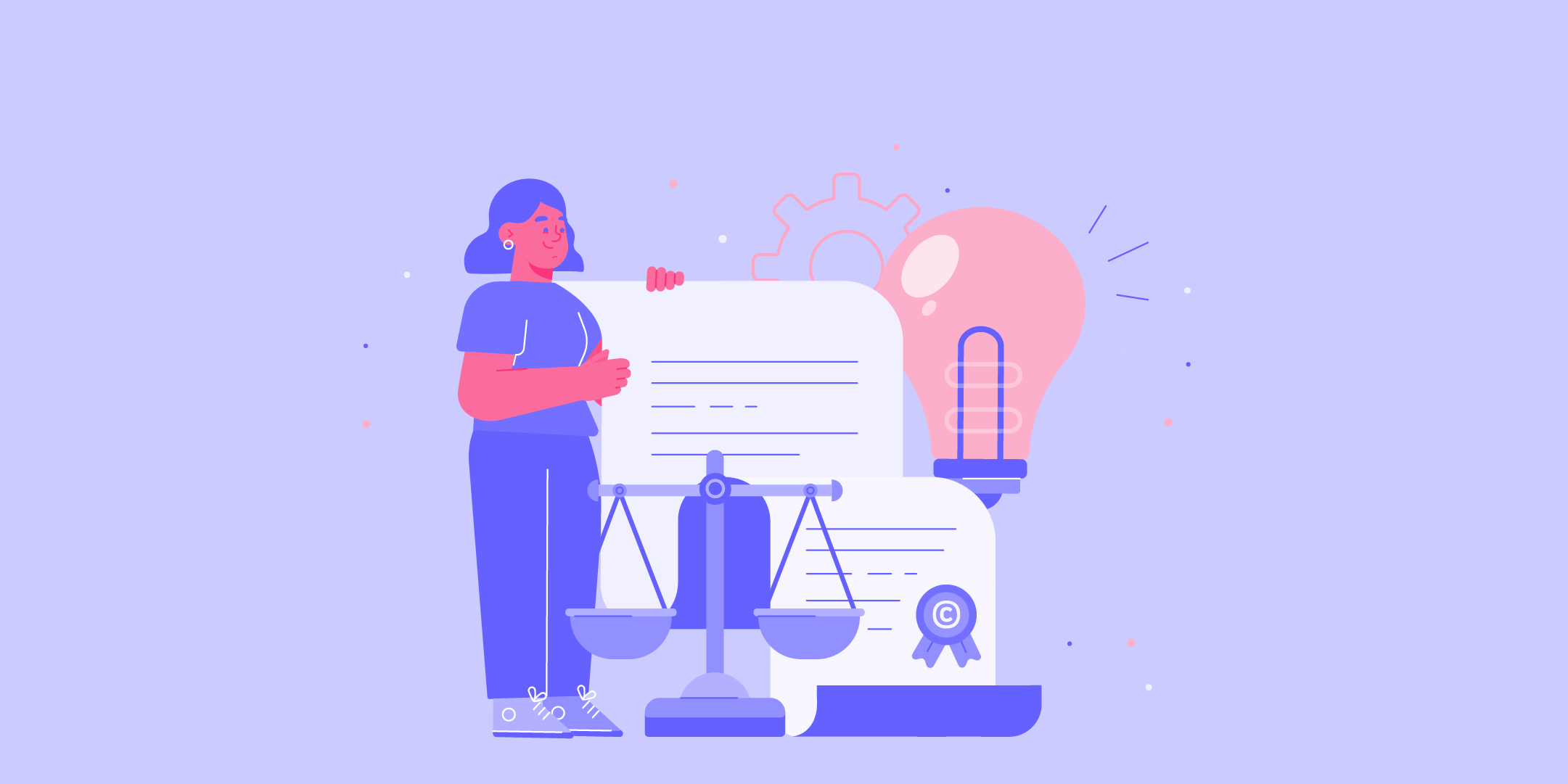
Compliance is no longer just GDPR and CCPA. The EU AI Act is now the defining regulation, with obligations phasing in across 2025 and 2026 — risk classification for AI systems, transparency duties for users interacting with AI, and stricter rules for higher-risk use cases. For any product touching the European market, this belongs in the plan from day one, not after launch.
Responsible AI is also a design choice, not only a legal one. Wolfpack Digital won a Webby Award for Responsible AI for our work on Equality AI, a product built specifically to reduce bias in decision-making. Fairness, transparency about when users are talking to AI, and a clear path to human review are features, not afterthoughts.
Ask yourself: How does the EU AI Act classify our use case? Are we transparent with users about where AI is involved? How do we test for bias and give users a way to reach a human?
6. Performance and Scalability

The old concern was whether your servers could handle the compute. With managed APIs and serverless inference, that's rarely the bottleneck now. The real operational questions are latency, token cost at scale, rate limits, and what happens when the model is slow or simply wrong.
Ask yourself: What does each AI call cost, and how does that scale with users? What's the response time, and is it acceptable inside the user flow? When the model fails or hallucinates, does the product degrade gracefully or break?
A feature that's brilliant at ten users and unaffordable at ten thousand isn't ready. Designing for cost and failure is part of designing the feature.
7. User Acceptance and Experience

Users have higher expectations and lower patience for AI than they did in 2023. A feature that feels gimmicky, or that confidently gets things wrong, damages trust quickly. The best AI experiences set expectations honestly, show their sources, and make it easy to correct or override the AI.
Ask yourself: Will this feel genuinely useful, or like AI for the sake of a press release? Are we honest about AI's limits in the interface? Can users see why the AI suggested something and push back on it?
Take it further: Prototype the AI feature with real users early. With AI-native design, a working prototype, not a static mockup, can be in front of users in days, so you learn whether the feature lands before you invest in building it fully.
8. The competitive landscape has flipped

In 2023, having AI was a differentiator. In 2026, it's table stakes; your competitors have it too. The edge no longer comes from having AI. It comes from doing it well: AI that's useful, reliable, responsibly built, and aimed at a real problem rather than bolted on for the demo.
Ask yourself: What does AI done well look like in our category, versus AI done as a checkbox? Where can quality of execution — accuracy, trust, experience — set us apart from competitors who shipped a generic chatbot?
9. Risks and Mitigation

The classic risks still apply: data security, privacy, and bias. AI-native products add a few that barely existed in 2023 — hallucination in user-facing outputs, prompt injection, sensitive data leaking to third-party models, and IP or copyright exposure from generated content.
Ask yourself: Where could the model produce a confidently wrong answer in front of a user, and what catches it? How do we stop sensitive data from leaving our boundary? Are inputs sanitised against prompt injection? Do we have human review where the stakes are high?
Mitigation isn't a one-time audit. It's monitoring, guardrails, and keeping a human in the loop where it matters — the same principle that runs through everything else in this list.
Conclusions
The 2023 version of this article asked whether AI was worth the leap. In 2026, the leap is behind us. AI is woven into how good products get designed, built, and shipped, so the work is no longer deciding if — it's deciding where AI genuinely helps your users and making sure every AI output is reviewed by someone who knows what good looks like.
That's the part that's easy to get wrong and expensive to fix later. If you want help figuring out where AI belongs in your product — or want it built AI-native from the start — Wolfpack Digital has spent over a decade shipping products for startups, scale-ups, and enterprises, and we now build them at 2026 speed. Try the AI estimator, explore our AI-native development service, or start an AI MVP and put your idea in real users' hands within four weeks.