The moment computers became small and cheap enough for personal use, a supernova of change and innovation started off. And we’re still feeling its effects today. Yes, we are talking about digitalization, the process of moving data, tasks, and communication itself into the digital world.
You can feel these effects in hundreds of different ways, some direct, some a lot more subtle. For example, you no longer have to leave your home to get groceries 🛍️, because there’s an app for that. What may be less obvious is that by using computers to centralize and process all kinds of data, businesses are becoming a lot better at recognizing their customers’ needs.
So, you can thank digitalization for being able to buy your favorite yogurt without leaving the room and for the 20% discount you received at just the right time.
But that’s all old hat by now.
2020 and 2021 have been quite a different experience if you want to call it that, but a new year is on the horizon, so let’s discuss what the future holds! These are the five most impactful digitalization trends you can look forward to in 2022:
The 5 Digitalization Trends that Will Rule 2022
Before diving into new territory, we think it’s important to look at some context. Due to social distancing and the need to keep ourselves and those around us safe, there’s been a huge increase in demand for digital communication and services.
Think of it like this - how many people heard about Zoom before the pandemic? Did you know that the software has been around since 2012?
Then there’s the topic of emerging technologies. While the Internet of Things is pushing digitalization to new boundaries, artificial intelligence, machine learning, and Augmented Reality are also becoming integral parts of our lives in this digital age.
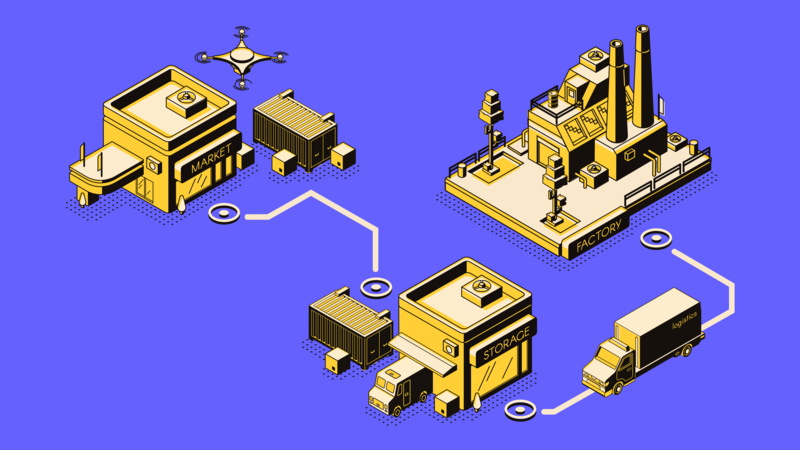
1. Better Supply Chains across the Globe 🚚
Due to the pandemic and new rules put in place to stop its spread, every step of the global supply chain has been disrupted. Factories produced less, transport slowed down, and distribution to the end-user became difficult. Both supply and demand went through abrupt changes.
At the same time, these challenges have pushed many companies and even government bodies to focus on improving supply chains.
The question is how. The answer is digitalization, obviously. While the concepts and ideas we’ll present shortly aren’t new, they’re only now being fast-tracked towards broad implementation.
There are three major ways in which software can improve our existing supply chains:
- The Internet of Things, namely smart hardware that communicates throughout the manufacturing and shipping process
-
Monitoring software that provides unprecedented transparency to all members of the supply chain, ensuring better coordination
-
Forecasting solutions that can analyze the market in its complexity and anticipate supply and demand while accounting for both internal and external factors
Built on these pillars, the digitalized supply chain will be able to:
-
Keep an accurate overview from start to finish. With data readily available on the cloud, everyone, from those sourcing raw materials to the end-user will know what to expect, when, and where. Manufacturers, carriers, distributors, and buyers will use digital solutions to know exactly how many goods they’ll receive and how many they can ship forward.
-
Offer more personalization. The demand for personalized goods and services has been on the rise for a long time and digital solutions are there to make it possible. Computers with specialized software can segment buyer groups to a level of detail impossible to the human mind and calculate the best offers and strategies to use, down to the individual level.
-
Churn out products faster than ever. With advanced analysis and forecasting applications, companies can accurately predict demand while taking into account all kinds of factors, like the weather, holidays, and market trends. As a result, products are being built and even shipped before they’re ordered, ensuring speedy delivery and revenue. 📊
-
Avoid blockers in real-time. With the right software and a network connection, admins can get real-time data on inventory, how the production line is doing, and which devices will need maintenance soon. The same approach works for more than the assembly line, too. Finding carriers and distributors on the go will become easier than ever.
As you see, supply chains aren’t only going to become sturdier, but better in general 💪. That can serve as a lesson - when we as a people encounter new challenges, we develop new solutions. In this case, it’s all about digital solutions.
2. The Artificial Intelligence Takeover 🔌🧠
Artificial Intelligence has been making the rounds in high tech circles for some time now, but unlike previous years, AI will take its place in the spotlight, instead of backstage. Experiments have been made, computers were given small tasks and now they’re trusted enough for the big leagues.
Don’t believe us? Here are some numbers: it’s estimated that 2021 saw $85.3 billion invested in AI systems, but that number is expected to jump to a whopping $204 billion by 2025 🤯, that’s a compound annual growth rate of 24.5%!
So, what areas of machine learning are receiving all this funding? Well, as far as 2022 is concerned, the focus areas will be these:
Cybersecurity
You might be asking yourself how one can digitalize an industry that’s digital by definition. Simple, by creating a better barrier between hackers and the most vulnerable points in any network - the people using it.
Traditionally, it’s the cybersecurity tech’s job to educate employees and monitor internal traffic for suspicious activity. But, as data flows increase in size, it’s becoming hard for people to keep an eye on everything.
Companies are training AIs to become ever-vigilant protectors against cybercrime. These security bots can spot malicious messages, links, and software. Moreover, they’ll be constantly improving themselves by running simulations. Once a weakness is found, the AIs will work on strengthening their security. 🔒
While machine learning will never be a complete substitute for human prudence and good judgment, it will soon play a major role in preventing and mitigating disastrous security breaches.
Increasing sustainability
One of the driving factors of pollution is an inefficient use of our resources, leading to needless waste. Finding solutions and processes that reduce waste to a minimum means analyzing countless small factors and processing an ungodly amount of data. In short, humans are ill-prepared for this kind of task. But, it’s exactly a computer’s bread and butter. 🖥️
Here are just a few of the ways you’ll see AIs helping the environment in 2022 and onwards:
AI may in fact prove to be a huge driving force for positive change in the future. A study published in Nature Communications suggests that Artificial Intelligence could have a positive impact on 79% of the 17 Sustainable Development Goals and 169 targets from the UN’s 2030 Agenda for Sustainable Development.
Overcoming the language barrier
Communication between humans and computers has always been a challenge. We simply think and express ourselves differently than our artificial creations. But, that divide is getting smaller, as AIs are becoming better at understanding the complexities of Natural Language Processing (NLP).
After reading that paragraph, you might already have a few uses in mind for this development. The beautiful part is that other readers did the same thing, but with different results. That’s because NLP has an extremely wide range of applications:
- Sentiment analysis
- Data processing
- Virtual Assistance technology
- Market analysis
- Improving search engines
- Predictive text
- Writing assistance
- Mental illness prediction
- Language translation
- Preventing misinformation
- Chatbots
While you’re probably enjoying some of these uses already, 2022 will probably mark an increase in the quantity and quality of programs that use NLP. 💬
Digital Healthcare
Of all the topics we’ll cover in this article, this one is probably the least surprising. After all, the pandemic has created a great need for better health services, specifically ones that keep both the patients and personnel safe from infection 😷. So, there’s been a much larger focus on creating digital healthcare solutions as of late. Here’s the scoop:
Most of the time, medicine isn’t a one-size-fits-all deal. How illness affects people is determined by plenty of factors, so they often need a personalized experience. While this task was usually handled by trained personnel, 2022 will see an increase in trained AIs. Essentially, these apps will provide medical advice and diagnosis, either completely handling basic issues or making work easier for doctors when it comes to more serious matters.
When analyzing medical data, such as x-rays, every errant pixel can make the difference. So, attention to detail is crucial, and there’s growing interest in AIs that can provide that attention. Machine learning could prove a huge boon in interpreting radiographs and detecting diseases like cancer.
Lastly, there’s the development of new medicines. Machine learning has become an invaluable tool in fast-tracking pharmaceuticals to release. By running lightning-fast tests, digital solutions have proven their usefulness and they will likely see more use in 2022.
It has been long speculated that Artificial Intelligence will play a crucial role in the development of our species. We think it’s safe to say that we’ve started to see that potential being realized.

3. The Internet of more and more Things 🌐
While advancements in AI blur the line between human and mechanical minds, the IoT does the same for our everyday lives. More and more products are capable of connecting to the internet and each other. That’s pretty much the definition of digitalization.
So, what's next for the IoT? Well, plenty of things, a report estimated that the IoT market will see a compound annual growth rate of 16.5% from 2021 to 2027.
How to Use AI and IoT in the Medical Industry
Since we just talked about the importance of AI in the medical field, it would be a crime to not mention IoT’s influence in healthcare too. The advancements will be quite widespread:
-
Wearable sensors, while relatively new on the market, could radically change healthcare as patients can get accurate, professional-level measurements without leaving their homes. Biomonitors that track temperature, heart rate, and respiratory rate are becoming more and more common.
-
End-to-end communication between patients and doctors ensures that people can receive assistance conveniently and securely anytime.
-
IoT-powered hospitals will be better equipped to provide personalized and timely treatment for patients and manage medical staff and equipment.
How to Use the Internet of Things to Make a Smarter World
While the Internet of Things was at first seen as a way to make our homes smarter, it was quickly discovered that there’s no reason to stop at the front door. The IoT market is growing quickly and coming up with all kinds of great use cases. Here’s what you can look towards:
Smart cities will pick up more steam. There are plenty of different ways in which to digitalize human settlements. But the major focus at this stage is adding sensors throughout cities to gather actionable data and identify improvements. A few examples would be:
-
Parking sensors that broadcast open spot locations and their number, making parking easier for residents
-
Motion and light sensors to increase traffic fluidity and energy efficiency when lighting the city
-
Public transit trackers that keep people up to date on the location and schedule of buses, trains and help then send feedback to government officials. We’ve worked on such a project, so check out Transreport to see the idea in practice in London
-
Advanced communication methods between first responders to coordinate and ensure a higher level of public safety
We mentioned in trend #1 that digitalization can be extremely useful for assembly lines. That’s just one example of how smart factories can revolutionize the industry. Besides ensuring proper maintenance and reducing both costs and waste, the IoT is making strides in the areas of logistics, planning, product development, and quality control.
Even other businesses are taking advantage of digitalization through the advent of smart offices. Since tons of people have started working from home and discovered that they like it, companies now need to up their game.
Digitalization has been a great boon in resource allocation and management. It ensures that the space, supplies, appliances, and even furniture are used to their full potential. Furthermore, climate control and occupancy detection devices cut down on energy waste too.
And to tie a neat bow on this subject, let’s look at smart stores. Ecommerce sites used to have brick-and-mortar stores beat in terms of data collection, but that won’t be the case for much longer. Beacons and store networks can better understand consumer behavior and even send instant messages, such as personalized offers based on their movement.
4. Augmented Reality, Virtually Everywhere 📲
Next on the list is Augmented Reality or AR for short. While I’d love to say that 2022 will be the year of virtual, augmented, and mixed reality, we are still dealing with cutting-edge and expensive tech. As such, AR is the first to rise, being accessible to anyone with a smartphone.
Experts are projecting that the AR market will grow from $6.12 billion in 2021 to $97.76 billion in 2028, a staggering CAGR of 48.6%.
But it’s not just convenience that’s driving AR forward. Now that 5G is widely available, software developers are taking advantage of the much greater internet speed and designing much more intensive augmented experiences.
Moreover, tech such as LIDAR, or light detection and ranging, is being added to more devices, such as iPhones. With these sensors, it’s easier for our everyday gadgets to perceive depth, which can greatly enhance what they can do to augment reality.
So, think about all the AR options you have right now and imagine them becoming faster and more immersive. Things like placing virtual furniture before actually making a purchase will become more common, as will AR filters and digital try-on options in the beauty industry.
Cars are also getting a digitalized makeover in 2022. Automobile brands like Audi, Kia, Cadillac, and Hyundai have been working on adding AR features to car windshields. Drivers will get a heads-up display showing them their intended route, safety information, and sensor readings. The idea is to provide more information while also reducing distractions and lowering the chances of accidents.
The first AR-capable cars are due to hit the market in 2022 with government bodies seemingly satisfied with the changes. So, you can expect to see another revolution in the automotive industry come side-by-side with self-driving cars.
But there’s even more on the horizon. For example, museums have started leveraging the technology in their exhibits to show visitors things that were simply impossible before, and with a lot more depth. An example would be “Revivre” at the National Museum of Natural History in Paris. It’s an AR exhibit that brings extinct animals to life-like reality with the help of AR glasses.
On a similar note, you can expect similar digitalization trends in education. After all, student engagement would skyrocket when classes are more akin to interactive games than lectures.
AR has applicability on all levels of education, from basic and fun guides for preschoolers, to complex 3D diagrams for college students and even professionals extending their knowledge at work.
While you might think investing in these new ideas might be costly and slow-moving, it’s actually an excellent time for it. With more people both working and learning from home, AR has the potential to not just bridge the gap in experience, but even overshoot it.
While 2022 might well be the year of AR, this trend could also turn into a springboard for Virtual and Mixed Reality to take center stage. The major roadblocks there are reducing the costs for gadgets and creating a wide enough library of experiences to justify purchases.
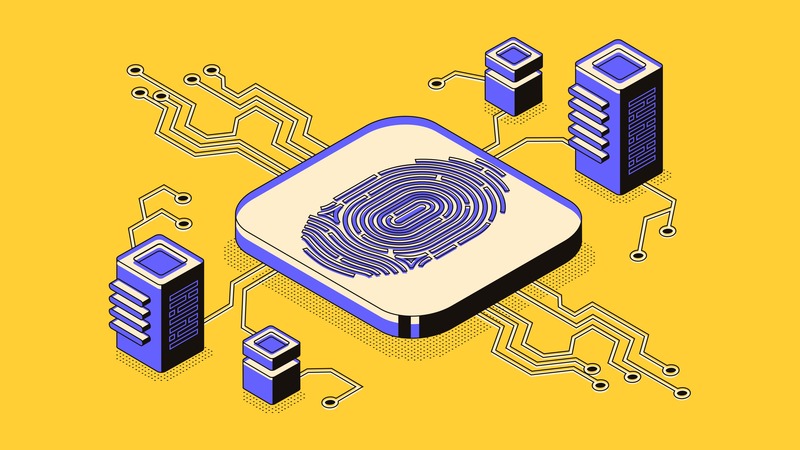
5. Data Privacy in a new light 🔐
Lastly, I’d like us to put aside new tech and focus more on its implications.
Digitalization in general has been a great asset for both consumers and businesses. On one hand, people receive better user experiences, while on the other, companies get tons of data that they can use to further enhance UX.
But, as this symbiosis deepens, we need to ask ourselves where to draw the line between useful data and information too personal to share. After all, with the IoT and AR tech collecting millions of parameters about our lives and AIs to process it, many are worried that companies could capitalize too much on emotions and impulses to drive sales.
This is becoming a hot topic since a large portion of the population started working from home. With the new conditions, most started learning more about data privacy and proper security. Hooray for staying cooped up in our homes! 😩
Anyway, the buzz is being heard both by governments and corporations. While GDPR has been in effect for some time now, adoption among companies is still not absolute. The good news is that it’s been picking up speed as of late, and we’ll probably see a greater push for widespread GDPR adoption in 2022.
Besides the EU, more countries are starting to look into laws that protect the personal information of their citizens.
In the US, Virginia is following in California’s footsteps by passing its own data privacy law in 2021 and it will take effect on the first day of 2023. So, 2022 will mark the beginning of change and more US states will likely start doing the same.
Other countries around the globe are passing or at least drafting their own laws, as you can see in this graph. The question now is if these laws will keep up with the advancement in technology.
As for companies, it will be crucial that they explain transparently what data they collect and how that information is processed. For example, if a business uses machine learning to draw insights from customer data, they should specify what kinds of conclusions they’re looking for.
As such, a major focus for many corporations in 2022 will be developing their own Customer Data Platforms or CDPs for short. The idea behind such a platform is to cluster all customer data in a single place, bringing three major benefits:
- Customers have a clear overview of what data they’ve shared
- Marketing and sales teams can more easily turn raw data into useful insights
- Information is safely secured in one “vault” instead of fragmented over a network and at risk of being poorly secured
One last noteworthy detail is the rise in popularity of personal data protection services. Password managers and VPN are by no means new, but more people are becoming interested in these apps. So, their adoption might be yet another digitalization trend for 2022.
Bonus: Into the Metaverse 🌌
Facebook (the company) recently changed its name to Meta to signify their investment into the metaverse, and that’s got people talking. Of course, other big names like Microsoft, Shopify, and Autodesk plus many others have been jumping on the bandwagon as well.
Ok, that’s cool, but what really is the metaverse? Well, you can look at it as the next evolutionary stage of the Internet. If you're feeling dramatic, the metaverse can be seen as the peak of digitalization. It's an omnichannel that encompasses all digital experiences and overlaps with the real world.
Different digital spaces, such as social media, streaming services, and video games are steadily converging on each other.
For example, the popular video game Fortnite has hosted two in-game concerts. Online meeting programs are pushing new boundaries by adding fully rendered 3D avatars. Online stores are adding virtual reality features to showcase their products.
We’re still quite a few years away from the genuine metaverse experience, but it’s becoming clearer and clearer what that would look like. The big players in the tech industry have their eyes trained on creating their own visions of this digitalized existence, so the question is who will do it first.
Hopefully, we’ll be able to answer that question next year, when we’ll be looking at what new digital trends 2023 will hold.
Want to Be a Digital Pioneer? 🧑🚀
It takes vision to see the problems of tomorrow, today. And it takes dedication, skill, and creativity to come up with a solution before anyone else.
Luckily, with us as your tech partner, you’ll have advice from experienced product owners, help from a team of amazingly skilled developers, and design ideas from the most creative people we know — our UX/UI department.
And let me tell you, pushing existing boundaries is our bread and butter.
So, are you looking for a team of professionals with a proven track record to turn your digital product idea into reality? Then let’s start planning the future!
Remember! Whatever the problem is, digitalization is the solution!